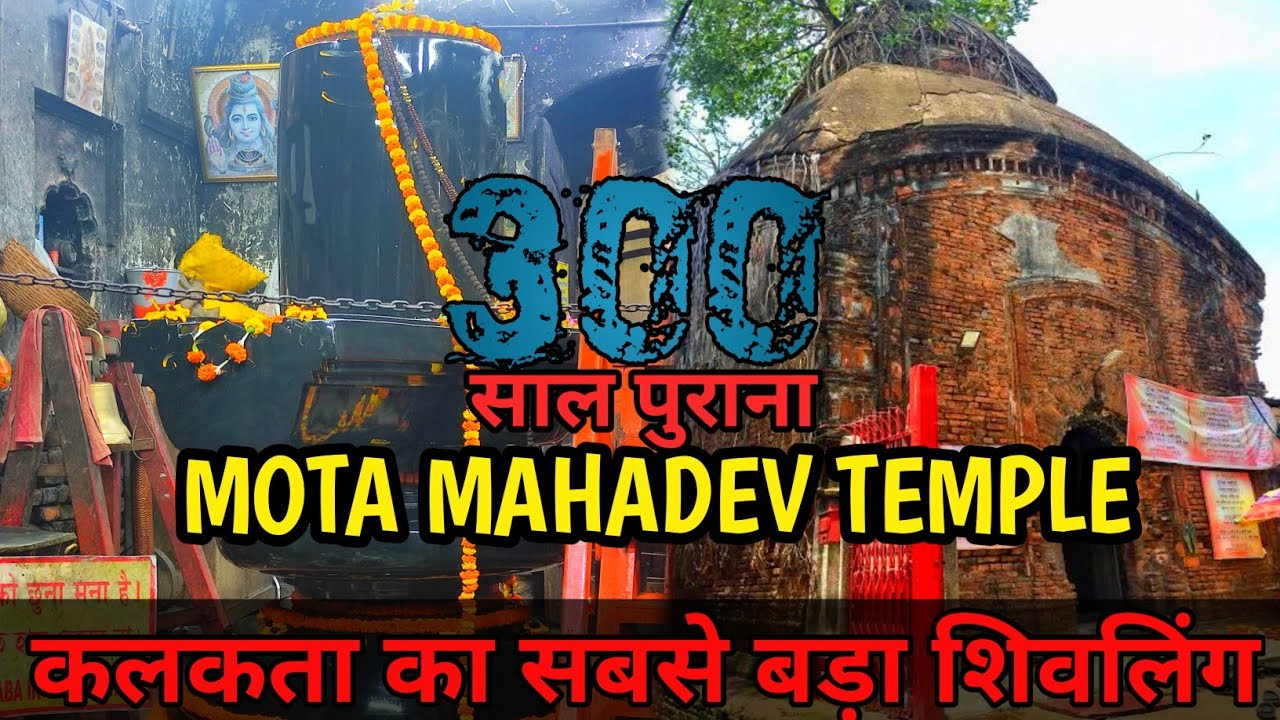

Kolkata is a city that has undergone modernization but has kept some of its ancient traditions alive even today. There are many neighborhoods in Kolkata that have a history of various empires and rich merchants. Some also have stories related to religious beliefs. One of the heritage sites is the Durgeshwar Mahadev Temple, which is alternatively called Mota Mahadev Temple and is situated in the Nimtalla neighborhood of North Kolkata.
Celebrated for its gigantic Shiva Lingam and enigmatic metal chains, this temple gives its visitors a sneak peek of the religious culture of the city. Despite the worn-out appearance of the exterior of the temple, visitors flock to the shrine, drawn by curiosity and the desire to worship Lord Shiva once they are aware of the legends surrounding it.
The Buro Shiva Temple Historical Account
The Durgeshwar Mahadev Temple dates back to the year 1794. The temple of the old Shiva came to be referred to as Buro Shiva Temple. This is how the name Buro Shiva Temple originated. Historical records say that Rasiklal Dutta and his brother Jaharlal Dutta belonged to a prominent family in Hatkhola and are responsible for the establishment of the temple.
Located on the banks of the Ganga, it is said that the Shiva Lingam was made by the sculptor Gadadhar Das, with Madanmohan Dutt also having a connection to the temple. As per local legend, Ganga used to flow near the temple.
The temple is famed for having a gigantic Shiva Lingam and iron chains, which invoke curiosity about the religious culture of the city. Though its outer surfaces look ancient, it nonetheless attracts many worshipers who come to visit Lord Shiva and learn more about the myths that surround this unusual place.
The History of the Buro Shiva Temple
The Durgeshwar Mahadev Temple is reported to have been built in 1794 and is also known as the Buro Shiva Temple. Historical records connect it with Rasiklal Dutta and Jaharlal Dutta as part of the prestigious Dutta family of Hatkhola. Ser to the shrine than it is today. Over time, the river’s changing course has altered the surrounding terrain, thus adding another dimension to the history of the temple.
The temple is an illustration of Bengal’s classical atchala architecture, known for its specific roof architecture. At around 50 feet tall, the temple is partially obscured by the branches of a banyan tree and its massive roots. The old bricks used in the construction create a simple building compared to the giant inside.
Giant Shiva Lingam and its Iron Chains
The key attraction of the temple is its giant Shiva Lingam, which is estimated to be around 10 feet tall. Due to its impressive height, the temple is termed as one of the most unique Shiva temples in Kolkata.
People go to worship the Lingam in a passionate way. The temple has iron stairs which help devotees to perform the ritual of abhishekam, ritual bathing of the god.
According to local folklore, the Lingam once mysteriously disappeared from its sanctum and was later found floating in the Ganga. The chains, some devotees believe, were placed there to prevent Lord Shiva from leaving the shrine again. However, this account remains a popular legend rather than an established historical event. The precise original purpose of the chains is uncertain, and temple priests have reportedly questioned the story.
Another local theory suggests that the Lingam existed before the present structure was built. Proponents of this theory highlight the massive dimensions of this structure and a rather simply sized entrance, without any answer to the question of how this gigantic structure was transported onto the premises. In spite of the absence of firm historical and archaeological evidence, the question of where it was taken from is still being raised.
Daily Worship and Rituals

Religious life at Mota Mahadev is organized in accordance with Hindu traditions. Morning rituals start at Mota Mahadev with Mangala Aarti, which is the first step in the conclusion of the worship process. Bhog Aarti takes place at noon on the same day, with a second stage of worship happening later in the afternoon.
Sandhya Aarti symbolizes the ending of the day, when people come to pray to their god. The rituals may take place at different times; therefore, visitors to this temple should know the schedule before coming there.
A Part of Kolkata’s Heritage
Although it looks old and worn, Mota Mahadev Temple is still considered one of the most important sacred places among the worshippers.
About the Author