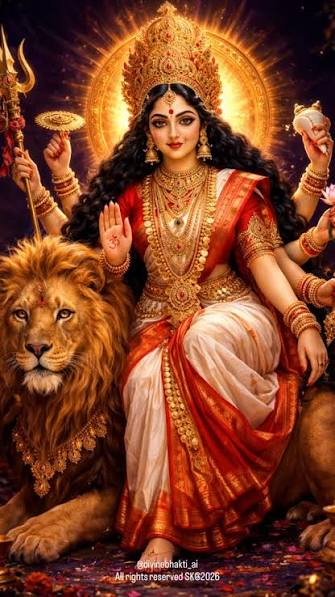
Durga Maa

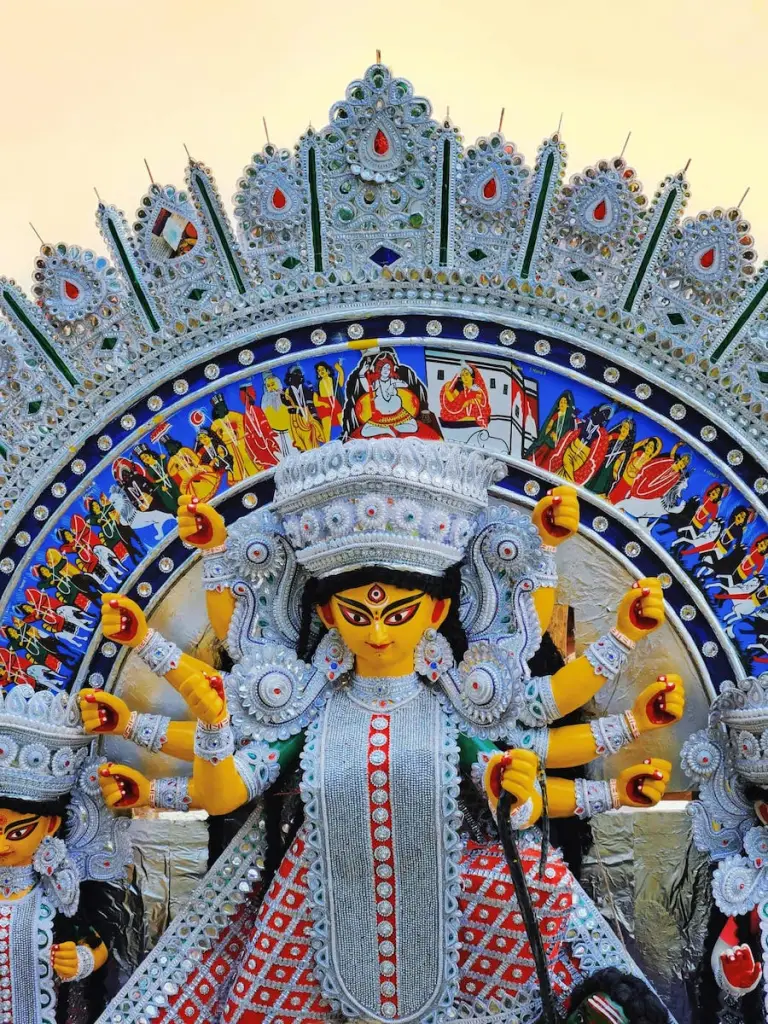
Durga Puja is the preeminent festival in India which is very much so in West Bengal and in other parts of eastern India. It is true that the Goddess Durga’s magnificent idol takes the fore during the celebrations, but in some traditional Bengali idols, what is not as public is the presence of Lord Shiva behind her. This subtle inclusion puts forth spiritual, cultural, and philosophical ideas which in 2026 still pique the interest of the devotees.
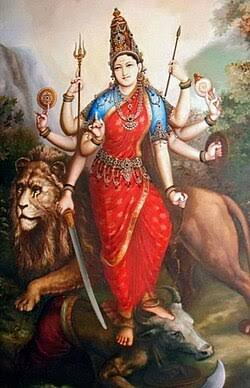
The Significance of Goddess Durga
In the Hindu mythos, Goddess Durga is the personification of Shakti, which is the supreme female energy that stands for strength, courage, and protection. Also, by tradition, the gods came together to produce Durga to put an end to Mahishasura’s rule, which was disrupting the natural order of the world.
Her victory is that of good over evil and of restoration of cosmic order. At Durga Puja, her ten-armed form, which rides a lion or a tiger, is the main focus, which we see as the strength to overcome adversity.
Why Is Shiva Hidden Behind Durga?
In certain traditional Bengali Durga idols, which are of the ekchala style, we see Lord Shiva’s image included as a small element behind the main structure. While this is not a feature of all Durga idols, it does present an interesting take on the Deities’ relationship.
In certain perspectives, it is that Shiva’s reserved presence is a symbol of his constant connection with Durga, which plays out when she goes to stay at her parents’ place during the festival. Also, in folklore, we see him as a background figure who is very much present and, in fact, does not try to outshine his wife.
In some interpretations, this tradition is that of the complementary relationship between Shiva and Shakti. Their association represents the put forth idea of consciousness and energy, which in many Hindu philosophy systems are looked at as indivisible.
Shiva and Shakti: A Cosmic Equilibrium Symbol.
In philosophical terms, in the Traditions of Tantra and Advaita, Shiva is the personification of consciousness and stillness; at the same time, Shakti is that of energy and action. Thus, they symbolize the play of dynamics through which existence plays out.
Thus, in the hidden form of Shiva we see that which is powerful and at the same time still. Also, his role behind Durga may be seen as a symbol of partnership, respect, and support instead of competition for prominence.
A Modern Perspective on the Tradition
Presently, some see this portrayal as a display of female empowerment. Durga takes center stage, which is that of courage and power; Shiva is in the background. This interpretation brings up issues of equality, mutual respect, and supportive relationships.
Conclusion
In 2026 that which is the background Shiva in Durga is at play beyond the level of art in some Durga Puja practices. It is a platform for looking at divine unity, love, and cosmic balance. Also, in 2026, this lesser-known aspect will still bring to the fore the spiritual and cultural importance of Durga Puja.
About the Author