Image Credit: Google

The moon always has a special significance in Hindu traditions, and it affects religious activities, festivals and spiritual practices. Purnima (full moon) and Amavasya (new moon) are some of the most important lunar days. They take place twice a month, but each embodies two opposite but complementary strands of the spiritual life: brightness, fulfilment and devotion, and introspection, remembrance and worship of the ancestors.
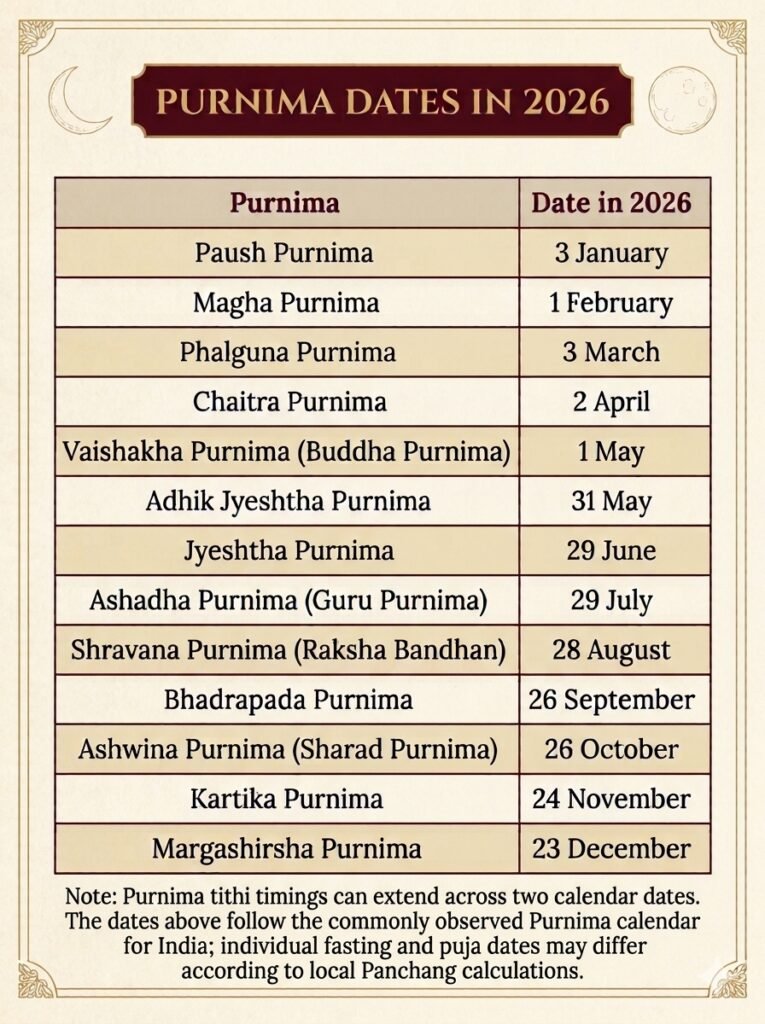
If you’re organising your religious activities, fasting or puja ceremonies, it’s beneficial to know the date of Purnima and Amavasya in the year 2026 in advance. Intriguingly, 2026 is a special year, as there is an extra lunar month of Adhik Jyeshtha, which means there are 13 Purnimas observed in the year rather than 12.
My personal interest in these two lunar phases is interesting. Amavasya is a time to slow down, reflect and reconnect with the spiritual roots, and is often associated with prayer and introspection. Let’s look at the entire calendar for 2026 and see which days are sacred.
Purnima Dates 2026: Complete Full Moon Calendar
Purnima is the 15th day of the Shukla Paksha (lunar phase), which is the waxing period of the moon. It is an auspicious day for fasting, worshipping Lord Vishnu, Satyanarayan Puja, taking holy baths and giving charity.
Here is the complete list of Purnima dates in 2026:
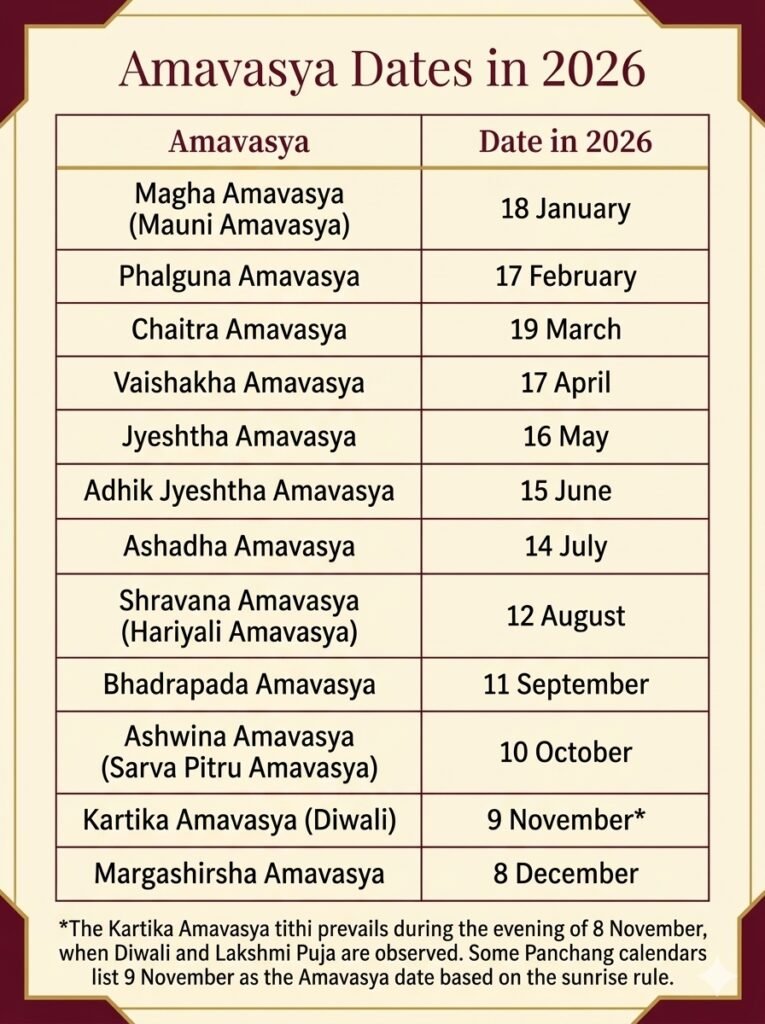
Amavasya Dates 2026: Complete New Moon Calendar
Amavasya is the last day of the Krishna Paksha, which is the night the moon is not seen in the sky. According to Hindu beliefs, this day is especially significant for the remembrance of ancestors, holding Pitru Tarpan, practising meditation, and offering prayers.
What Is the Significance of Purnima and Amavasya?
Why Is Purnima Considered Auspicious?
Purnima is a symbol of completeness, prosperity and spiritual illumination. Devotees often go on fasts, worship Lord Vishnu and conduct Satyanarayan Katha on this day. Charity, meditation and moon worship are also important practices.
There are a number of important Hindu occasions that coincide with the Purnima festival. Buddha Purnima is a celebration of Gautama Buddha’s birth, enlightenment and Mahaparinirvana. Guru Purnima celebrates the teachings of spiritual masters, and Deve Deepawali is related to Kartika Purnima.
I love that Purnima is a day of gratitude and togetherness. The occasion is meaningful not just from a ritualistic point of view, but also through religious activities, evening prayers and family pujas.
Why Is Amavasya Important in Hinduism?
Amavasya is special for remembering ancestors. Families conduct rituals like Shraddha and Pitru Tarpan to thank and acknowledge their ancestors who have passed away.
Mauni Amavasya is considered a time of silence, meditation and holy bathing. Sarva Pitru Amavasya signifies the end of Pitru Paksha, and Kartika Amavasya is celebrated as Diwali, the festival of lights.
I think what is really special and beautiful about Amavasya is that it is not just considered to be a day of darkness. Rather, it is a time for reflection, recollection and spiritual renewal. It is a reminder that there can be great starts in quiet moments.
Important Purnima and Amavasya Observances in 2026
Several occasions call for special mention due to their cultural and religious importance:
- Mauni Amavasya – 18 January: This day is dedicated to silence, meditation, and sacred bathing.
- Buddha Purnima – 1 May: Commemorates the life and spiritual teachings of Gautama Buddha.
- Guru Purnima – 29 July: Dedicated to honouring teachers and spiritual guides.
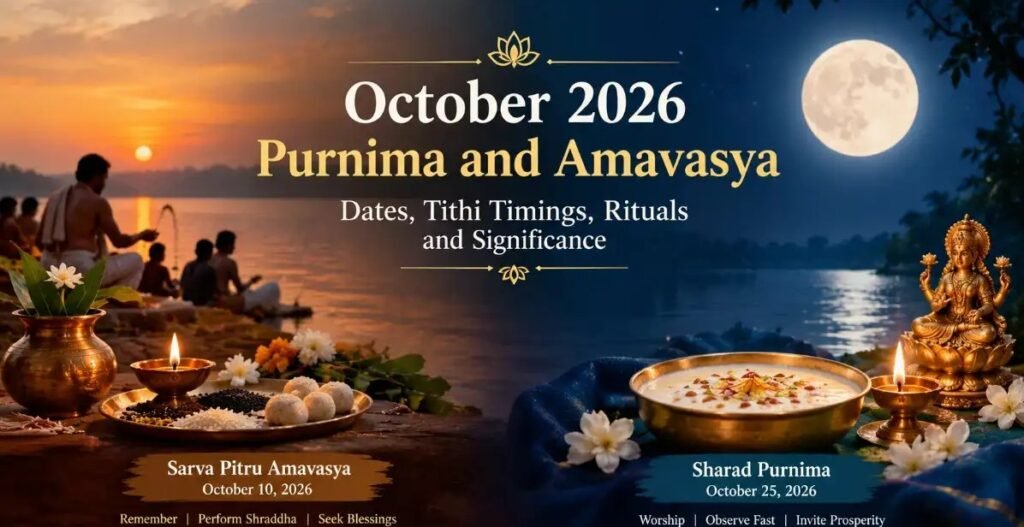
- Sharad Purnima – Night of 25–26 October: Traditionally associated with moonlight worship and special devotional observances.
- Sarva Pitru Amavasya – 10 October: Dedicated to ancestral remembrance and the completion of Pitru Paksha.
- Diwali – 8 November: Celebrated on Kartika Amavasya, with Lakshmi Puja performed during the evening.
How Are Purnima and Amavasya Traditionally Observed?
While there are some regional differences in practice, some of the common rituals include:
Devotees take a bath early in the morning on Purnima, keep a fast, do Satyanarayan Puja, read religious scriptures and give food or clothes to the poor. The traditional practices involve moon worship and offering Arghya after Moonrise.
During the Amavasya, one can be engaged in rites for their ancestors, water, black sesame seeds during Tarpan, light up the oil lamps and spend time in prayer or meditation. Giving and feeding the hungry are also thought to be good deeds.
It is crucial to note that fasting should be an individual religious act and should be modified according to individual health and physical ability.
Conclusion
Purnima and Amavasya are far more than two cycles of the moon in the Hindu calendar. These are all important aspects of faith in their own right, whether it’s a celebration of spiritual fulfilment, a reminder of ancestors or an exercise in reflection.
In 2026, there are 13 Purnima dates and 12 Amavasya dates, providing ample times for devotees to celebrate traditional festivals, conduct religious rituals, and deepen their spiritual bond.
I think the beauty of these celebrations about the moon is the balance they bring into it. One is for life’s abundance, the other for silence, gratitude and remembrance. They remind us that spirituality does not have to be large and spectacular, but is just as important when it’s small and reflective.
About the Author