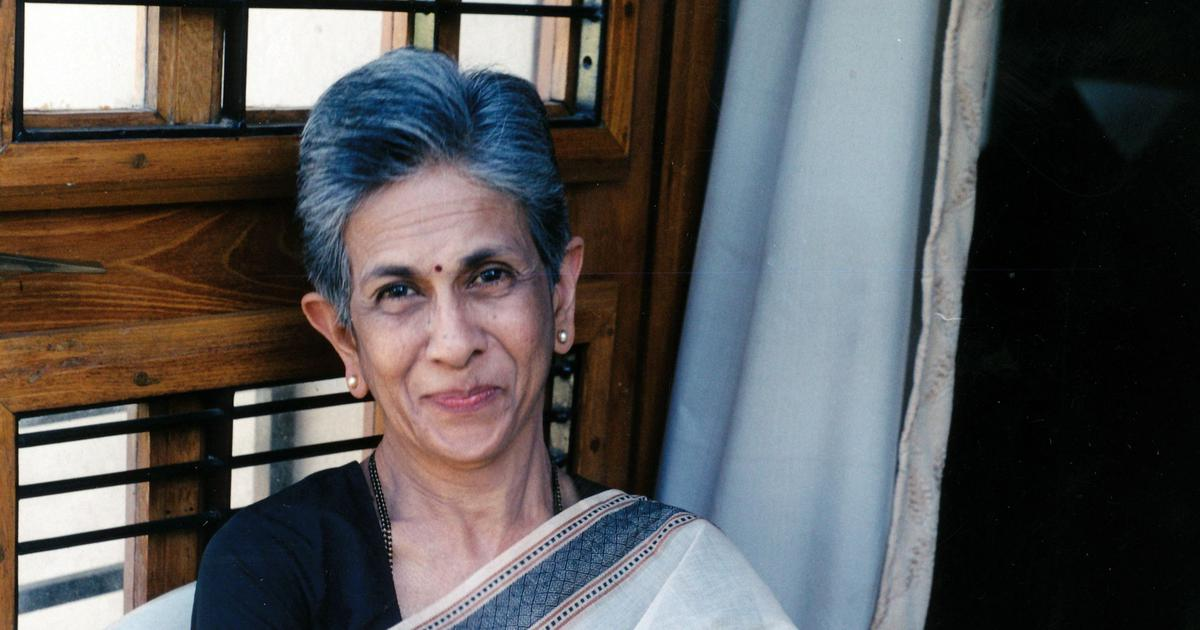

Shashi Deshpande is a preeminent voice in Indian English literature. Known for her clean yet potent style, she has depicted the lives, issues, and identities of average Indian women with great truth. In her novels and short stories, Deshpande has brought to light social issues, family dynamics, and the quiet struggles of women in society. Her literary success and bold perspectives have secured her a key place in modern Indian literature.
Early Life and Education
Shashi Deshpande was born in 1938 in Dharwad, Karnataka. In a literary environment, she was brought up, which was a result of her father, Adya Rangacharya, a renowned Kannada writer and dramatist. Also very much into creative and educational pursuits was her mother, Sharada Adya, which in turn encouraged artistic growth in the family. This very atmosphere, which was very rich in art and education from a young age, fueled Deshpande’s interest in reading and storytelling.
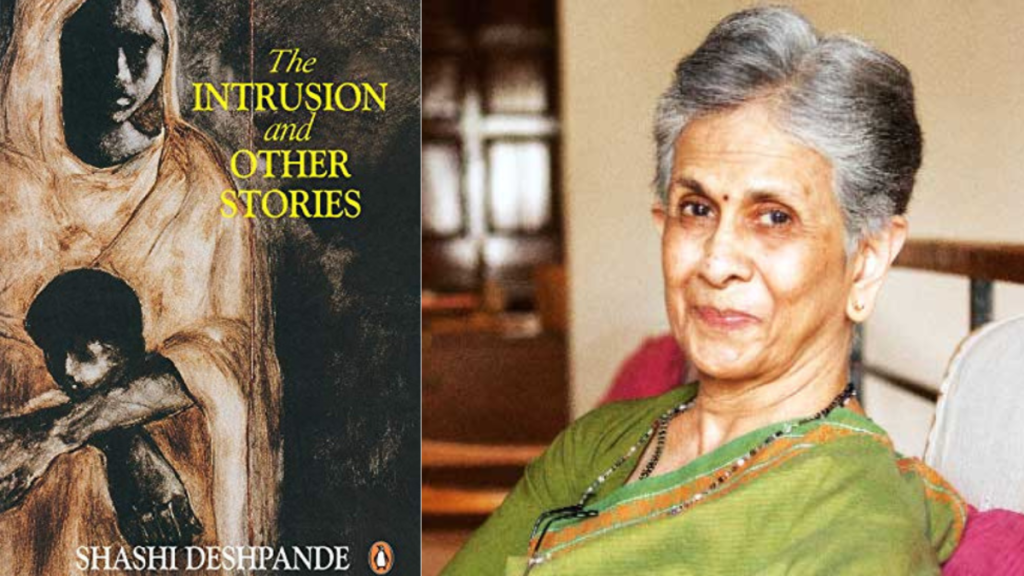
She grew up in Mumbai and Bangalore. Deshpande got her degrees in Economics and Law, which she followed with a study of journalism at Vidya Bhavan in Mumbai. For a while, she was a journalist for the magazine Onlooker. Her time in journalism later contributed to the development of a realist and thoughtful writing style.
Literary Career and Achievements
Shashi Deshpande started in literature with short stories, which she published in 1978. In 1980, she put out her first novel, The Dark Holds No Terror, which won praise for its bold look at a woman’s emotional issues.
Over the decades, she published many celebrated novels like Roots and Shadows, The Binding Vine, Small Remedies, and Shadow Play. In her work, she looked at the emotional issues that Indian women face as they live in a traditional setting. She depicted their struggle for identity, independence, and self-respect in very real terms.
Her book That Long Silence, which brought her to the notice of the nation, also won her the honor of the Sahitya Akademi Award in 1990. In 2009, the Government of India gave her the Padma Shri for her great contribution to literature. Thus, these awards were an indication of the effect of her work on both readers and critics.
Social Concerns and Advocacy
Apart from being a talented writer, Shashi Deshpande also put forth social issues in her works. Her novels question gender inequality, social expectations, and the silence women face in Indian society. She used literature as a platform to bring up identity, freedom, and justice issues.
In 1998, she left the Sahitya Akademi’s general council and gave back her Sahitya Akademi Award for the institution’s inaction in the issue of scholar M. M. Kalburgi’s murder. What she did showed her bravery and dedication to free speech.
In 2018, at the Goa Arts and Literature Festival, Deshpande also addressed issues of violence that arose from the India-Pakistan partition and put forth the value of peace, tolerance, and unity in society.
Conclusion
Shashi Deshpande’s body of work is a testament to her dedication, courage, and social awareness. Her novels,s which are very emotional in tone and very true to life in the way they present human relationships they are very much a source of inspiration for the readers. With her fearless approach and meaningful narratives, she has left an indelible mark on Indian literature. To this day, her works are relevant which is because they get readers to think deeply about society, equality, and personal freedom.
About the Author