

Few dismissals in cricket have generated as much debate as Mankading, the term commonly used for running out the batter at the non-striker’s end before the ball is delivered. Although the dismissal is permitted under the Laws of Cricket, it has often divided players, commentators and fans due to the long-running debate over the “Spirit of Cricket.”
At its core, the dismissal is fairly straightforward. When a non-striker moves out of their crease too early while attempting to gain an advantage, the bowler can remove the bails at the non-striker’s end before delivering the ball. If the relevant conditions of the law are satisfied, the batter can be given out.
Why Is It Called Mankading?

The name comes from one of India’s most celebrated cricketers, Vinoo Mankad. The incident that gave the dismissal its unofficial name took place during India’s tour of Australia in 1947-48.
Mankad ran out Australia’s Bill Brown at the non-striker’s end after Brown had moved out of his crease before the delivery. The incident attracted considerable attention and, over time, this type of dismissal became popularly known as “Mankading.”
Interestingly, “Mankading” is not the official terminology used in the Laws of Cricket. The dismissal is formally treated as a run out at the non-striker’s end. The nickname has simply remained part of cricket vocabulary for decades.
What Are the Rules?
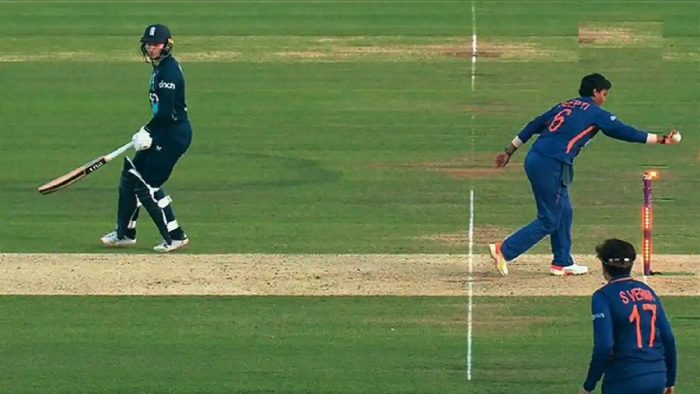
The basic principle behind the dismissal is to prevent the non-striker from leaving the crease early and gaining an unfair advantage while attempting to complete a run.
Under the Laws of Cricket, a non-striker can be dismissed if they are outside their ground at the relevant point before the bowler would normally release the ball. However, the timing of the bowler’s action is important.
If the bowler breaks the wicket at the non-striker’s end before completing the delivery action, and the batter is outside the crease, the dismissal can be valid. A bowler cannot simply wait until the delivery has effectively been completed and then attempt a run-out under the same provision.
The law therefore gives bowlers a legitimate way to discourage batters from backing up excessively early. The non-striker is also expected to stay inside the crease until the right moment.
Why is Mankading so controversial?
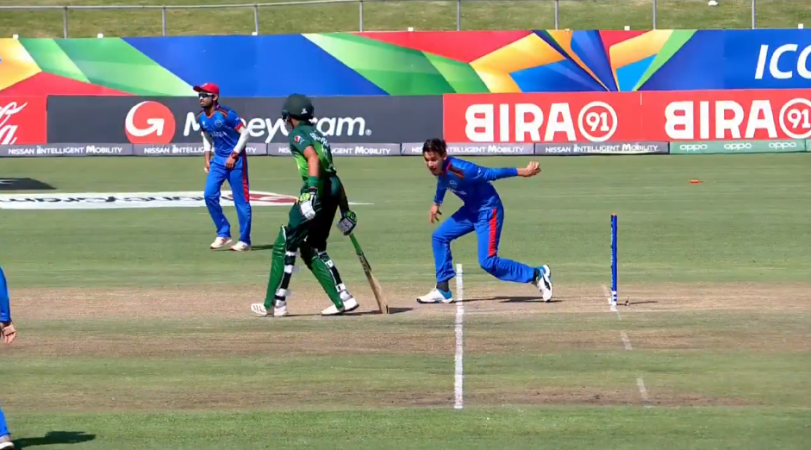
In spite of being governed by the Laws of Cricket, the batting-out clause has caused many arguments, as many feel that the bowler should have given a warning to the batter before doing it.
In 2019, during the Indian Premier League, a notable occurrence took place, with a Rajasthan Royals player, Jos Buttler, getting dismissed on the non-striker’s end by the Kings XI Punjab captain, Ravichandran Ashwin. The incident created a lot of dialogues over the actions of the individuals involved, commentators, and enthusiasts.
Critics argued that such modes of dismissal are unacceptable within the spirit of the game of cricket, while some other individuals claimed that since the batsman left his crease too early, there were no rules violated on the part of the bowler. This incident revealed that there are discrepancies between what is considered right from a legal standpoint and what people think is the right way of playing cricket.
Mankading: Legitimate or Unsportsmanlike?
The easiest way to understand this dilemma is to differentiate what is considered lawful and what is seen as unethical. If the rule concerning Mankading is observed, it is lawful irrespective of the fact that some players and fans do not approve of this procedure.
Cricket already penalises players for attempting to gain advantages outside the accepted boundaries of the laws. A bowler who oversteps the crease, for example, can be called for a no-ball. In limited-overs cricket, that can also give the batting side a free hit.
Similarly, a batter can avoid the risk of being run out at the non-striker’s end simply by remaining behind the crease until the delivery reaches the appropriate stage.
Ultimately, Mankading remains one of cricket’s most unusual talking points because it sits at the intersection of law, strategy and sporting tradition. The controversy may continue, but its legal status is much clearer: when the required conditions are met, running out the non-striker is a valid form of dismissal.
About the Author