
Who Founded Hinduism? The Question That Has No Single Answer
Ask who founded Christianity, and you’ll hear “Jesus”. Ask about Islam, and the name is Muhammad. Ask who founded Hinduism, and even scholars pause. As of 2026, the honest answer is the same as it has always been: nobody did.
A Faith Without a Founder
Hinduism never began with a single prophet, a dated revelation, or a founding council. It grew slowly across thousands of years, gathering ideas the way a river gathers tributaries. Hymns, rituals, philosophies, local village customs, and regional gods all flowed into it. Historians see it less as one invented religion and more as a long conversation between many communities on the Indian subcontinent.
Even the name is borrowed. “Hindu” was originally a word outsiders used for the people living near the Indus River. Followers themselves preferred terms like Sanatana Dharma, meaning “eternal order,” or Vaidika Dharma, the path of the Vedas.
Where the Story Begins
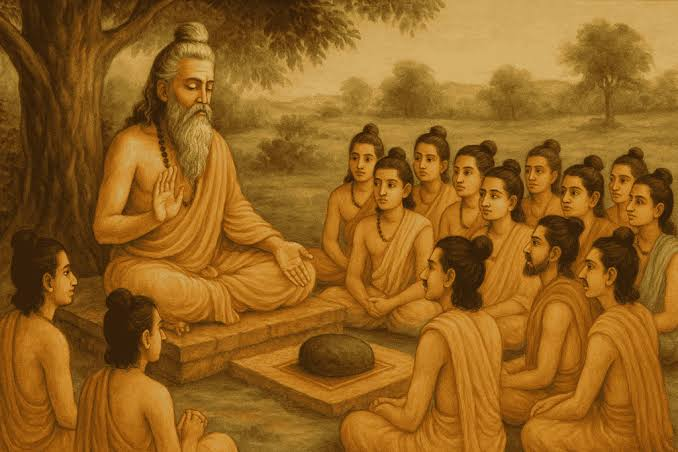
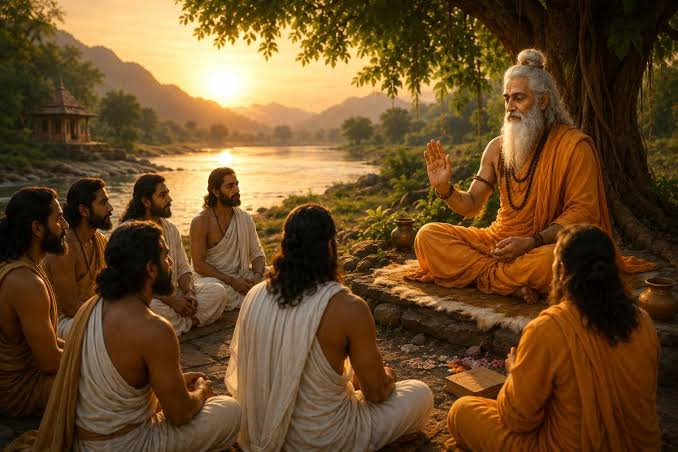
The oldest layer comes from the Vedas, a body of sacred hymns believed by tradition to be “heard” by ancient sages rather than written by them. That detail matters. In Hindu thought, the wisdom is not seen as one person’s invention. It is considered timeless, simply perceived by seers over the ages.
Later came the Upanishads, with their deep questions about the self and ultimate reality, then the great epics, the Ramayana and the Mahabharata, which carry the Bhagavad Gita. Many scholars say these elements came together into what we’d recognize as Hinduism roughly between 500 BCE and 300 CE, a period of growing cities and new ideas.
Why the Absence of a Founder Matters
This explains a lot about how Hinduism works today. With no single authority at the top, there is no single rulebook everyone must follow. One person may worship Vishnu, another Shiva, another the Goddess, and some follow a more philosophical path. Scholars group these into four major streams: Vaishnavism, Shaivism, Shaktism, and Smartism. Others don’t claim any label at all.
Belief in karma, rebirth, and the pursuit of moksha (liberation) ties much of this together, but how people live these ideas varies enormously from one household or region to the next.
Hinduism in 2026
Today, around 1.17 billion people practice Hinduism, roughly 15% of humanity, making it the world’s third-largest religion. Most live in India, Nepal, Mauritius, and Bali, though Hindu communities now thrive across Europe, North America, Africa, and Australia. Yoga and meditation, both rooted in this tradition, have become global habits far beyond the temple.
The Takeaway
If you came looking for a name, the search ends in an interesting place. Hinduism’s “founder” is really countless sages, poets, thinkers, and ordinary families who shaped it over millennia. That may be its most remarkable quality: a faith so old and so woven into daily life that no one person can claim to have started it.
About the Author