
India’s Cricket Coaches: The Unsung Architects Behind Every Victory (1971–2026)
When millions cheer for Virat, Rohit, or Bumrah, few stop to think about the man standing quietly near the dugout, the coach. Yet without these masterminds, Indian cricket’s golden era might never have happened. Let’s walk through the remarkable journey of every head coach who shaped Team India.
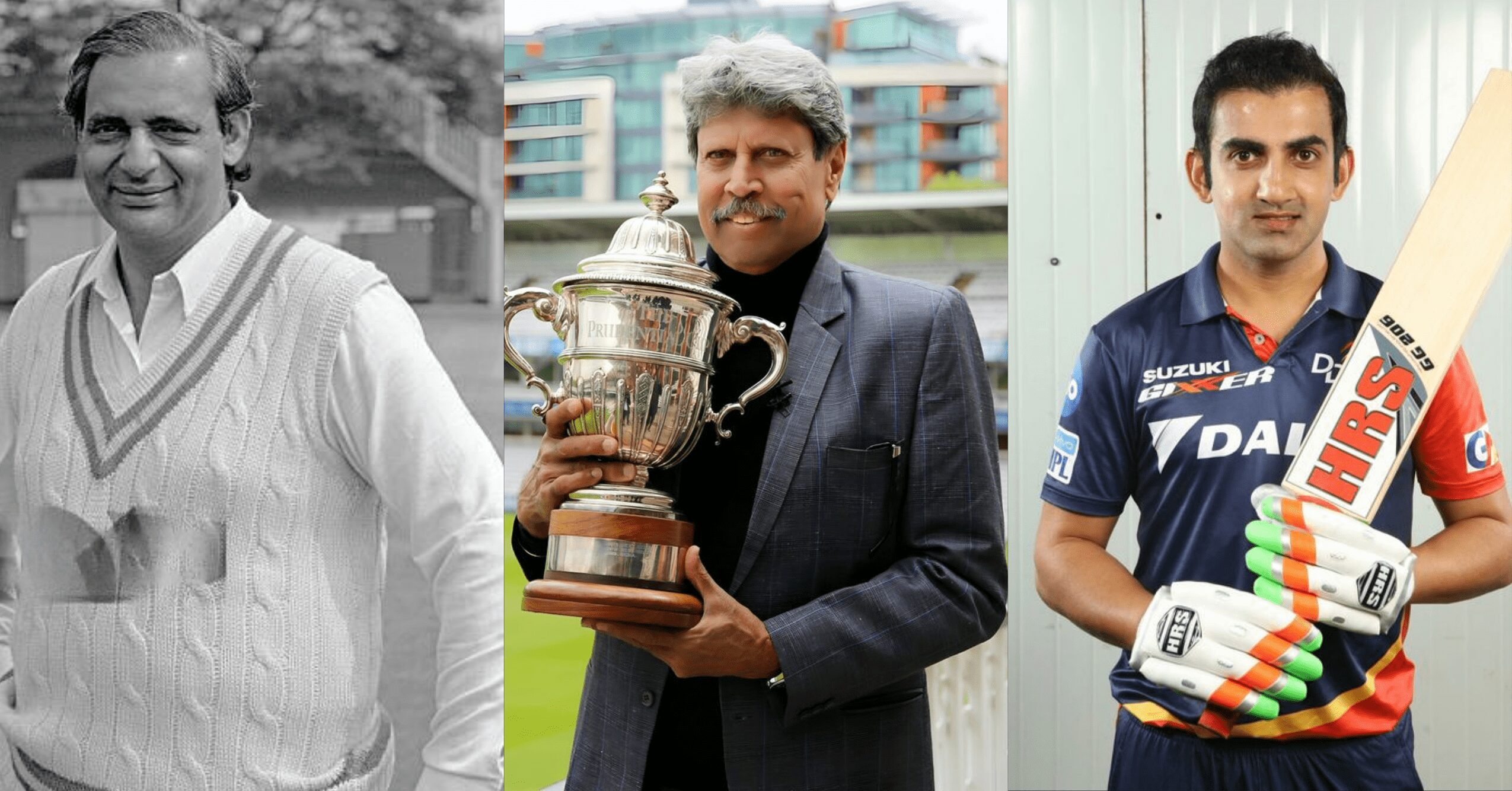
From the Shadows to the Spotlight: India’s Coaching Legacy.
India’s coaching story began in 1971 with Keki Tarapore, a largely forgotten name today. Through the 70s and 80s, coaches like Hemu Adhikari, Bishan Singh Bedi, and Ajit Wadekar laid the groundwork during an era when coaching itself was barely formalised in Indian cricket.
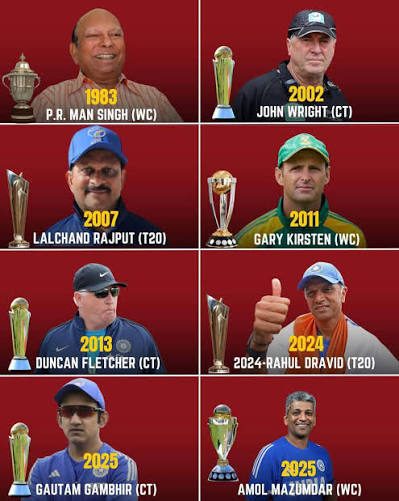
The real turning point came in 2000, when John Wright became India’s first-ever foreign coach. A New Zealander walking into one of cricket’s most passionate dressing rooms bold move. But Wright earned respect the hard way, nurturing a young Dravid-Tendulkar era team that reached the 2003 World Cup Final and recorded a historic Test series win over Australia in 2001.
Greg Chappell (2005–2007) stirred controversy but introduced modern thinking. Then came the magical Lalchand Rajput moment though his tenure was brief, India lifted the inaugural T20 World Cup in 2007 under his watch.
Gary Kirsten remains many fans’ favourite coach. Calm, composed, and brilliantly strategic, the South African guided India to the 2011 ODI World Cup ending a 28-year trophy drought. Pure gold.
Duncan Fletcher kept the ship steady through turbulent transitions, picking up the 2013 Champions Trophy along the way. Then came Anil Kumble, intense and disciplined, whose short stint produced a 100% Test win record remarkable, even if brief.
Ravi Shastri old, charismatic, with three stints in total, built a fearless team identity. Test wins abroad, aggressive batting mindsets, and multiple series victories defined his era.
Rahul Dravid, “The Wall,” brought exactly what you’d expect: patience, structure, and faith in young talent. He crowned his tenure with the 2024 T20 World Cup, India’s first ICC title in over a decade.
Today, Gautam Gambhir holds the reins. Passionate, combative, and results-driven, he’s already delivered three trophies the 2025 Champions Trophy, the 2025 Asia Cup, and the thrilling 2026 T20 World Cup victory over New Zealand. The future looks genuinely exciting.
The Full List at a Glance
From Keki Tarapore in 1971 to Gambhir today, over 25 coaches have guided this team, Indians, Kiwis, Australians, South Africans, and Zimbabweans, each leaving their fingerprint on Indian cricket’s identity.
Trophies grab headlines. Players become legends. But behind every victory, a coach quietly built the belief. That’s the real story of Indian cricket, and it deserves to be told.
About the Author