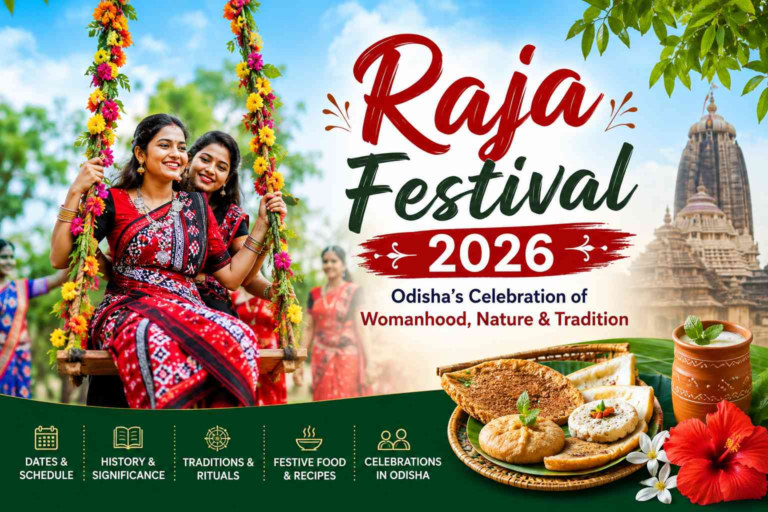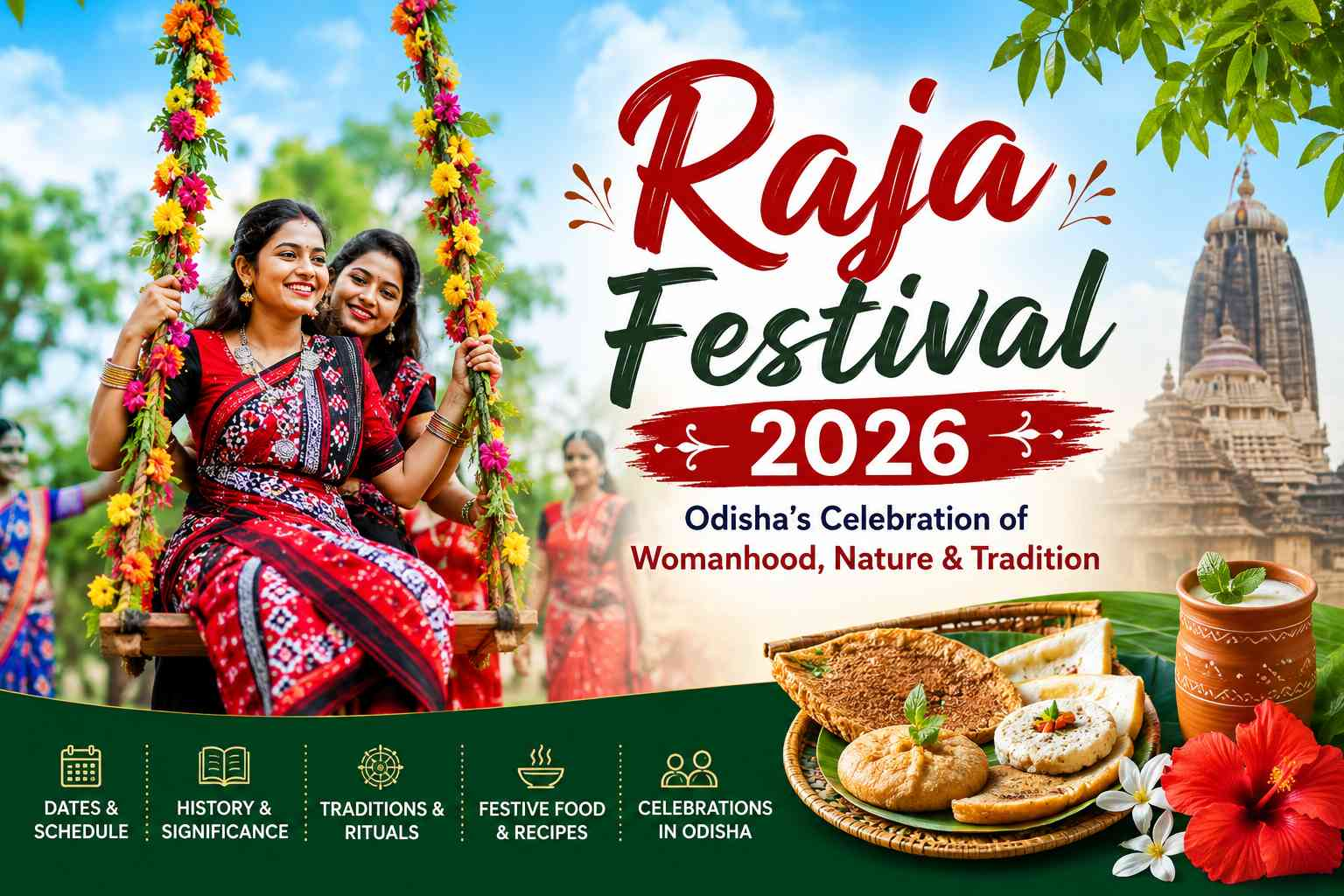

Odisha has been associated with many festivals; however, Raja Parba is a special one as it relates to nature, womanhood, and agricultural life. Unlike festivals based on deities or historical episodes, the festival celebrates Mother Earth and her cycles in relation to fertility. Raja Parba is a cheerful festival celebrated throughout Odisha and unites families and communities through tasty food and attractive clothes.
Three days of celebration
It all begins on the day before Mithuna Sankranti, which is called Pahili Raja. Starting from Sajabaja rituals, people begin cleaning their houses and collecting clothes, items of food, and decorations for the festival. The second day, known as Raja Sankranti, marks the Sun’s transition into the zodiac sign of Gemini. The third day is called Sesha Raja.
Traditionally, these days are considered those of resting, relaxing, and respecting nature. All activities related to agriculture are also curtailed, indicating that the earth needs rest just like a woman does during her menstrual period.
The Celebration of Fertility and Womanhood
Menstruation and fertility are among the main themes of Raja Parba. According to local folklore, Mother Earth goes through a menstrual cycle during this festival and therefore does not allow farming activities at this time. The observance encourages people to recognise natural processes as essential parts of life.
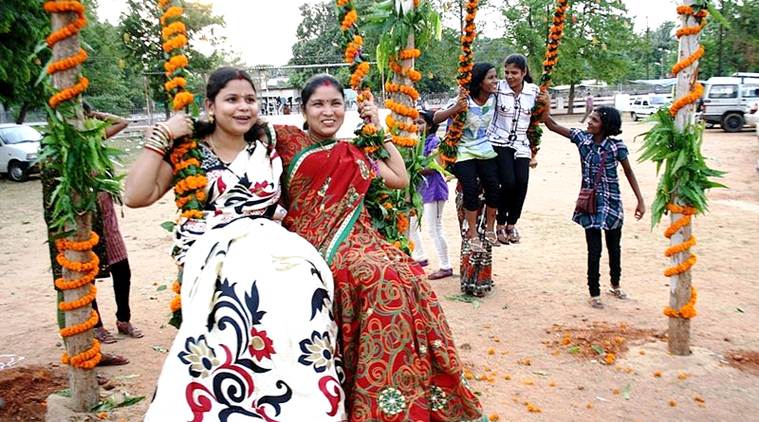
Young girls and women become the centre of the festivities. They often receive new clothes, jewellery, and beauty accessories, while enjoying time with friends and relatives. Decorated swings, hung from sturdy trees and adorned with flowers and leaves, are among the festival’s most recognisable attractions.
Traditional Food and Festive Flavours
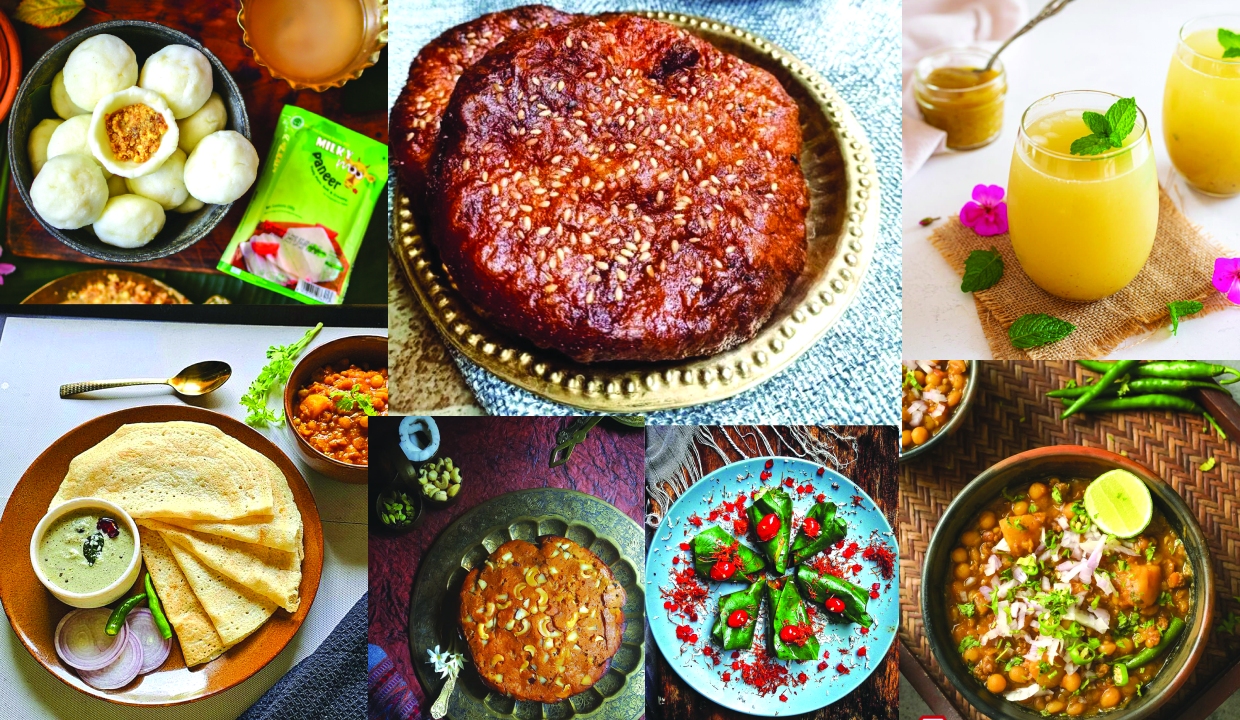
Food is another essential part of Raja Parba. Families make several Odia delicacies and present them to their relatives and friends. One of the most sought-after delicacies is Poda Pitha, which is a type of baked cake prepared with rice, coconut, and jaggery. The distinct flavour of this cake makes it a favourite item in the festival’s celebrations.
Sharing sweets and food among each other strengthens the bond among families, as such festivals promote the spirit of generosity among families. They serve to remind families of their ancestors through the recipes that many of the families use.
Basumati Snana: The Rite of the Earth
The day of Basumati Snana follows, which literally means the bathing of Mother Earth. Here, the traditional pestle symbolising the Earth is purified in turmeric and water. This stone is then decorated with a mixture of sandalwood paste, vermilion, flowers, and other good things.
Occasionally, farm tools are worshipped in this ceremony, where people pray for good rainfall, good crops, and a good harvest. The ceremony shows the connection between the farmers and Mother Nature’s bounty.
A Festival That Challenges Menstrual Taboos
Raja Parba offers a valuable opportunity to discuss menstruation in a positive cultural context. The festival links the cycle of women to the ability of Mother Earth to bear life and gives parents the chance to talk to their children about this natural occurrence in a non-embarrassing way.
Though the interpretations differ, the festival sends out a message of respect for women’s experience and recognition of their significance in the family and society. Its symbolism in terms of environment promotes appreciation for soil, rain, plants, and sustainable agriculture.
Conserving a Tradition that Lives
In the past, Raja Parba marked the onset of the rainy season when farmers started preparations for the new agricultural season. Traditional swings, common celebrations, and pithas made it easier for people to bond with each other.
In the present day, people’s way of celebrating has changed due to rapid urbanization. However, there are still cultural events and family gatherings, native foods, and public events that maintain the festival spirit.
Raja Parba is not limited only to the title of seasonal festivals. This festival symbolizes happiness, culture, environment, and femininity. Maintaining the traditions of this festival can help future generations appreciate the culture of Odisha.
About the Author