
The cryptocurrency market has taken a serious hit in November 2026. Bitcoin, Ethereum, and several major altcoins have fallen sharply, leaving investors wondering whether this could be a good time to buy.
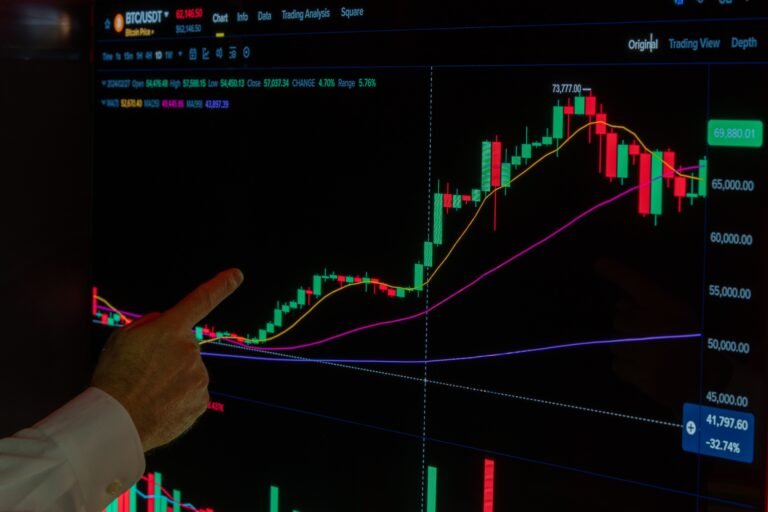
Bitcoin has dropped roughly 53% from its October 2025 all-time high of around $126,000. The November sell-off pushed it to a new cycle low near $55,100 on November 21, before it attempted a recovery. Market reports have also highlighted heavy ETF outflows, macroeconomic uncertainty, and weakening investor sentiment.
For crypto investors, a crash can create an opportunity to reassess projects that may have become overpriced during the previous rally. But it can also expose weak projects, excessive leverage, and investments built mainly on hype.
Also Read: Carrot Beet Juice Recipe in 2026
So, what are the best crypto coins to consider after the November 2026 crash?
In this article, we explore five established cryptocurrencies: Bitcoin, Ethereum, Solana, XRP, and BNB. These are not guaranteed winners or personal buy recommendations. They are a research watchlist based on their market presence, use cases, liquidity, and long-term development.
Crypto Market in November 2026: What Happened?
November has been a difficult month for the crypto market.
Bitcoin fell from around the $80,000 region at the beginning of the month to a low near $55,100 on November 21. By November 28, it was trading around the $59,000 region, according to market reports. These prices are snapshots and can change rapidly.
Several factors have contributed to the decline.
1. Macroeconomic uncertainty
Investors have become more cautious amid concerns about interest rates, inflation, and the broader economic outlook. When investors reduce exposure to risky assets, cryptocurrencies often experience pressure alongside technology stocks.
2. ETF outflows
Institutional investment products can influence market sentiment. Recent reports have highlighted substantial outflows from Bitcoin and Ethereum exchange-traded funds, reducing an important source of buying demand during the downturn.
3. Liquidations
Many crypto traders use leverage to increase their exposure. When prices fall sharply, exchanges may automatically close leveraged positions, creating additional selling pressure.
4. Fear and uncertainty
The decline has weakened investor confidence. Some holders are selling to limit losses, while others are waiting for clearer signs of a recovery.
The key takeaway is that a lower price does not automatically mean an asset is undervalued. Investors should examine the project, its adoption, and its risks rather than buying simply because the chart looks cheaper.
Top 5 Best Crypto to Buy in 2026 After the November Crash
1. Bitcoin (BTC)
Bitcoin remains the most established cryptocurrency and is often considered the starting point for researching the digital asset market.
It was created as a peer-to-peer digital currency and operates on a decentralised network. Bitcoin has a maximum supply of 21 million coins, a feature that contributes to its scarcity-based investment thesis.
Why consider Bitcoin after the crash?
- It has the longest track record among major cryptocurrencies.
- It has deep liquidity compared with most crypto assets.
- It is widely recognised by individual and institutional investors.
- Its limited supply is central to its long-term value proposition.
- It has an established ecosystem of exchanges, wallets, and investment products.
Bitcoin’s price decline may attract long-term investors who believe adoption will continue over time. However, the November crash also shows that scarcity alone does not prevent significant losses.
Risks to consider
Bitcoin can remain in a bear market for an extended period. It is sensitive to liquidity conditions, investor sentiment, and regulatory developments. Even after a 50% or greater decline, it can fall further.
Investor profile: Those researching a long-term, relatively established crypto asset and willing to tolerate substantial volatility.
2. Ethereum (ETH)
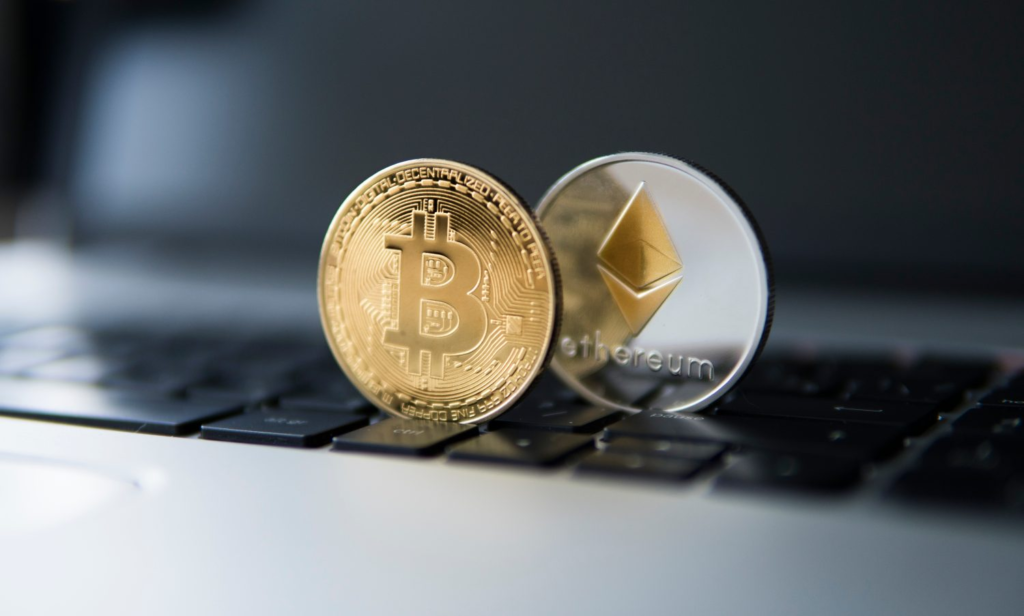
Ethereum is a blockchain platform that supports smart contracts and decentralised applications. Unlike Bitcoin, which is primarily associated with digital money and a store-of-value thesis, Ethereum also serves as infrastructure for decentralised finance, tokenisation, NFTs, and other blockchain-based applications.
ETH is used to pay transaction fees on the Ethereum network and can be staked to help secure the network.
Why consider Ethereum after the crash?
- It has a large and established smart-contract ecosystem.
- It supports decentralised finance and tokenised assets.
- ETH is used to pay network transaction fees.
- Staking provides a network participation mechanism.
- Its long-term outlook is linked to blockchain application growth.
Ethereum’s investment case depends not only on market sentiment but also on whether activity and value continue to accrue to its ecosystem.
Risks to consider
Ethereum faces competition from other smart-contract networks. Layer-2 scaling solutions also create ongoing questions about how much economic value ultimately accrues to ETH itself.
Investors should monitor network activity, fee trends, development progress, and competition rather than relying solely on past performance.
Investor profile: Those interested in smart-contract infrastructure and the broader decentralised application ecosystem.
3. Solana (SOL)
Solana is a high-performance blockchain designed to support fast transactions and relatively low transaction costs. It has attracted developers and users across decentralised finance, consumer applications, token launches, and digital collectibles.
SOL is the network’s native token. It is used for transaction fees and staking.
Why consider Solana after the crash?
- It supports high-throughput blockchain applications.
- Transaction costs are generally low compared with many networks.
- It has an active ecosystem of developers and applications.
- SOL is used for staking and network participation.
- It offers exposure to a different blockchain ecosystem from Ethereum.
Solana may appeal to investors who believe consumer-facing blockchain applications and high-speed networks will continue to grow.
Risks to consider
SOL is generally more volatile than Bitcoin. Its price can react strongly to changes in speculative activity and broader market sentiment.
Investors should also assess network reliability, decentralisation, ecosystem sustainability, and competition from other blockchains.
Investor profile: Those comfortable with higher volatility and interested in blockchain adoption beyond Bitcoin.
4. XRP (XRP)
XRP is the native digital asset of the XRP Ledger, a blockchain designed for efficient transaction settlement. It is often discussed in connection with cross-border payments and transfers of value.
The XRP Ledger supports fast settlement and relatively low transaction costs, making it different from networks primarily focused on general-purpose smart contracts.
Why consider XRP after the crash?
- It has a long-standing presence in the crypto market.
- The XRP Ledger is designed for efficient payment settlement.
- XRP has an established trading ecosystem.
- Its use case is distinct from Bitcoin’s scarcity thesis and Ethereum’s smart-contract focus.
- Regulatory developments may influence investor confidence and market access.
For investors researching payment-focused crypto assets, XRP remains a well-known project to evaluate.
Risks to consider
XRP’s investment case depends partly on real network usage and the role of the token within that activity. Competition from other payment networks and stablecoins may affect adoption.
Regulatory uncertainty can also influence market sentiment, particularly across different jurisdictions.
Investor profile: Those interested in payment-focused blockchain technology and willing to assess regulatory and adoption risks.
5. BNB (BNB)
BNB is the native token of the BNB ecosystem. It is used for transaction fees on BNB Chain and has additional utility across supported services in the broader ecosystem.
BNB Chain supports decentralised applications, decentralised finance, and other blockchain-based services.
Why consider BNB after the crash?
- It has utility within the BNB Chain ecosystem.
- It is used for network transaction fees.
- It has an established blockchain and application ecosystem.
- Its use cases extend beyond simply trading the token.
- It has a long-standing position among major crypto assets.
BNB’s investment thesis is connected to the continued use and development of its ecosystem.
Risks to consider
BNB is exposed to risks associated with its ecosystem and its relationship with the broader Binance platform. Regulatory actions, changes in exchange activity, or declining network usage could affect sentiment.
Investors should also understand the token’s supply and burn mechanisms before making assumptions about scarcity or future value.
Investor profile: Those researching ecosystem-based crypto assets and comfortable with platform-related risks.
Quick Comparison: Five Cryptocurrencies to Watch
| Cryptocurrency | Main use case | Relative risk consideration |
|---|---|---|
| Bitcoin (BTC) | Digital money, scarcity-based store-of-value thesis | High volatility, but most established |
| Ethereum (ETH) | Smart contracts and decentralised applications | Competition and value-accrual questions |
| Solana (SOL) | High-throughput blockchain applications | Higher volatility and network risks |
| XRP | Payment and settlement use cases | Regulatory and adoption risks |
| BNB | BNB Chain ecosystem and transaction fees | Platform and ecosystem concentration |
This comparison is qualitative, not a forecast. Risk can change quickly, especially during a market crash.
How to Approach Buying Crypto After the November Crash
A falling market can tempt investors to make one large purchase in the hope of catching the exact bottom. That approach is difficult even for experienced traders.
Here are some more disciplined considerations.
1. Avoid investing all your money at once
Some investors use a strategy called dollar-cost averaging (DCA), where they divide an intended investment into smaller purchases over time.
DCA does not guarantee profit or prevent losses. It can, however, reduce the pressure to predict a single perfect entry point.
2. Prioritise research over hype
Before buying a coin, consider:
- What problem does the project solve?
- Is the network being used?
- Does the token have a clear purpose?
- How does its supply change over time?
- Who are its competitors?
- What risks could permanently weaken the project?
3. Be careful with leverage
Leveraged crypto trading can magnify both gains and losses. During volatile periods, liquidation can happen quickly.
For long-term investors, borrowing money to buy crypto can add unnecessary risk.
4. Keep an emergency fund separate
Crypto should not be purchased with money needed for rent, education, medical expenses, or near-term goals.
The possibility of a recovery does not make a volatile asset suitable for every financial situation.
5. Use secure storage and reputable platforms
Research the exchange’s security practices, withdrawal policies, and regulatory status. For substantial holdings, learn about self-custody and the responsibilities involved in managing private keys.
Never share a seed phrase or private key with anyone.
Is November 2026 a Good Time to Buy Crypto?
There is no reliable way to know whether November 2026 will turn out to be the bottom of this market cycle.
Bitcoin’s decline of more than 50% from its peak may look attractive to some long-term investors. Yet historical crypto bear markets have sometimes produced even deeper losses.
A useful approach is to think in scenarios:
Bullish scenario
Inflation and interest-rate concerns ease, ETF flows stabilise, and blockchain adoption continues. Major cryptocurrencies could recover as investor confidence improves.
Neutral scenario
Prices remain volatile and move sideways for months while the market absorbs selling pressure and investors wait for stronger signals.
Bearish scenario
Macroeconomic conditions worsen, institutional outflows continue, or key support levels fail. Crypto prices could fall further despite already substantial declines.
The most sensible strategy is to avoid treating any one scenario as certain.
Crypto Tax in India: What Investors Should Know
Indian investors should understand the tax implications before buying or selling cryptocurrency.
According to the Income Tax Department’s guidance, income from the transfer of virtual digital assets (VDAs) is generally taxed at 30%, plus applicable surcharge and cess, under Section 115BBH. The rules also restrict deductions and loss set-off. Section 194S provides for 1% TDS on qualifying VDA transfers, subject to applicable provisions and thresholds.
Tax rules can be complex, especially when transactions involve multiple exchanges, swaps, or transfers. Consult a qualified tax professional and verify the current rules before making investment decisions.
Frequently Asked Questions
1. Which is the best crypto to buy after the November 2026 crash?
Bitcoin is the most established cryptocurrency on this list. Ethereum, Solana, XRP, and BNB each offer different use cases. There is no guaranteed best coin, and the right choice depends on risk tolerance and research.
2. Is Bitcoin cheap after falling more than 50%?
A large price decline does not automatically make Bitcoin cheap. Its value depends on demand, adoption, liquidity, market conditions, and investor expectations.
3. Can crypto prices fall further after a crash?
Yes. Cryptocurrency markets are highly volatile, and prices can decline further even after major corrections.
4. Is Ethereum a good long-term crypto to research?
Ethereum has an established smart-contract ecosystem and supports many decentralised applications. However, competition, network economics, and future adoption remain important risks.
5. Is Solana riskier than Bitcoin?
Solana generally has a shorter track record and higher volatility than Bitcoin. Its investment case is more closely linked to the growth and performance of its blockchain ecosystem.
6. Should beginners buy altcoins after a market crash?
Beginners should understand the risks before buying altcoins. Smaller or more speculative assets can experience sharp losses and may not recover after a downturn.
7. Should I buy crypto in one lump sum or gradually?
Some investors prefer gradual purchases to avoid relying on one entry price. This strategy does not eliminate risk, and investors should only use money they can afford to lose.
Also Read: Nariyal Ladoo Recipe in 2026
Conclusion
The November 2026 crypto crash has pushed major digital assets far below their previous highs. For investors researching the market, Bitcoin, Ethereum, Solana, XRP, and BNB remain five established cryptocurrencies with distinct use cases and ecosystems.
Bitcoin offers the longest track record and a scarcity-based thesis. Ethereum supports smart contracts and decentralised applications. Solana focuses on high-throughput blockchain activity. XRP is associated with payment settlement, while BNB provides utility across its ecosystem.
But a crash is not a clearance sale with guaranteed bargains. Prices can remain depressed or fall further, and even established cryptocurrencies carry significant risk.
My view is that the most useful response to a market crash is not to rush into the first green candle. It is to review the fundamentals, understand the downside, and make decisions with a clear time horizon and risk limit.
About the Author