What happens when a casino game stops behaving like a casino game and starts feeling like prime-time entertainment? The question became hard to ignore in 2020, when Evolution launched Crazy Time — and the industry quietly realized something had shifted.
On the surface it looked like another wheel-based live title. Within months it was clear it was something else entirely. Platforms that spotted the trend early moved fast: JawharaBet was among them, folding Crazy Time into its lobby at a time when most operators were still trying to figure out why session times were climbing.
The answer was in the format itself — players weren’t just spinning, they were watching, chatting, and sticking around for bonus rounds in a way no RNG slot had ever managed to produce.
Six years on, the conversation about where live casino goes next still tends to start with Crazy Time. That says everything about what Evolution built — and how quickly operators like JawharaBet understood what it meant for their players.
It Wasn’t Just a Casino Game
Before Crazy Time, live casinos were largely built around familiar products. Blackjack tables looked like blackjack tables. Roulette looked like roulette. Even innovative releases usually stayed within traditional casino boundaries. Crazy Time ignored those rules.
Instead of replicating a physical casino, Evolution borrowed ideas from television game shows, arcade games, colorful streaming content, and social entertainment. The result felt closer to watching a live broadcast than sitting at a gaming table.
A useful real-world example came during the COVID-19 lockdown period. While many sports leagues were suspended and people spent more time online, Crazy Time rapidly became one of the most watched and played live casino products globally.
Within a few years it was regularly outperforming traditional live dealer games in player engagement metrics.
Why Crazy Time Felt Different:
- Released by Evolution in July 2020 during a period of rapidly growing online entertainment demand.
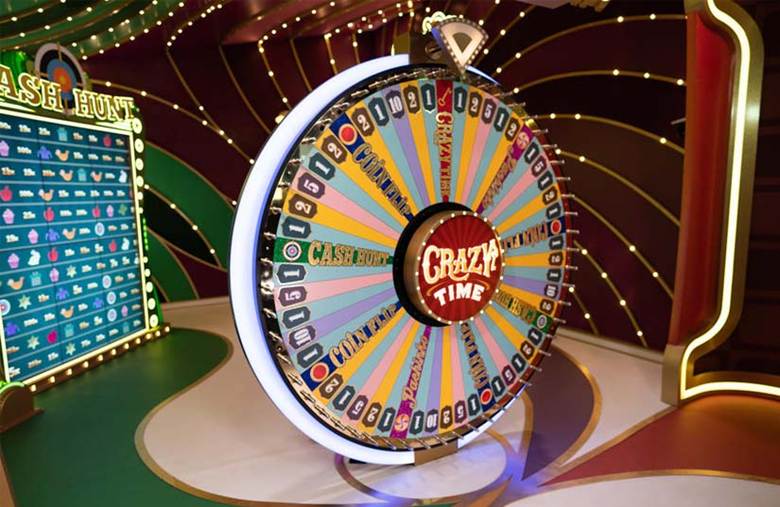
- Combined a live presenter, giant wheel, studio audience atmosphere, and multiple bonus games.
- Introduced four interactive bonus rounds: Coin Flip, Cash Hunt, Pachinko, and Crazy Time.
- Added the Top Slot mechanic, creating surprise multipliers before spins.
- Used bright television-style production rather than traditional casino aesthetics.
- Created anticipation between rounds instead of focusing only on outcomes.
- Encouraged viewers to stay for long sessions waiting for bonus features.
- Made spectatorship almost as important as participation.
- Delivered moments designed specifically for social media clips and streaming highlights.
The important shift was psychological rather than technical. Players were no longer simply wagering on outcomes. They were following a show, reacting to hosts, discussing bonus rounds, and sharing clips online.
That sounds obvious today. In 2020, it was a major departure from how live casino products were traditionally designed.
The Game Created a New Business Model for Live Casinos
Crazy Time did not merely attract players but changed what operators wanted from live content.
Previously, success in live casino often meant delivering efficient versions of roulette, baccarat, or blackjack. After Crazy Time, operators began demanding games that could generate excitement, retention, social sharing, and repeat viewing.
A good example can be seen across modern casino platforms, including RajBet. Today, game-show titles frequently receive premium placement on homepages because they attract longer viewing sessions and stronger engagement than many classic tables. What started as one product became an entire category.
Industry Changes Triggered by Crazy Time
| Industry Area | More Specific Industry Change |
| Studio Design | Evolution moved from traditional roulette-style studios to purpose-built productions featuring giant wheels, LED walls, motion graphics, dedicated bonus-game zones, and dozens of cameras, significantly increasing production budgets. |
| Host Selection | Dealers were replaced by presenter-style hosts trained in live entertainment, audience engagement, improvisation, and high-energy broadcasting similar to TV game-show personalities. |
| Marketing | Operators began using screenshots and clips of Pachinko, Cash Hunt, and 10,000x–20,000x multiplier wins as central acquisition tools instead of traditional welcome-bonus advertising. |
| Mobile Experience | Interfaces were redesigned to display betting panels, live video streams, multipliers, bonus trackers, and statistics simultaneously on smartphone screens without disrupting gameplay. |
| Streaming Culture | Crazy Time became one of the most streamed casino products on YouTube, Twitch, and Kick, creating a new category of gambling content built around live reactions and bonus hunts. |
| Session Length | Players increasingly stayed online through multiple wheel cycles waiting for rare bonus events such as Crazy Time or high-multiplier Pachinko rounds rather than leaving after a few bets. |
| Product Development | Competitors responded with titles such as Sweet Bonanza CandyLand, Mega Wheel, Adventures Beyond Wonderland, and Funky Time, accelerating the growth of the live game-show segment. |
| User Interface | Modern live casino lobbies shifted toward colorful thumbnails, animated multipliers, dynamic statistics, and prominent game-show placement instead of focusing primarily on classic table games. |
| Community Features | Live chat activity increased substantially as players discussed multipliers, predicted wheel outcomes, celebrated bonus triggers, and reacted collectively to major wins in real time. |
The influence spread quickly. Competitors started producing their own entertainment-driven titles. Playtech expanded its game-show portfolio. Pragmatic Play invested heavily in products such as Sweet Bonanza CandyLand and Mega Wheel. Suddenly, every major provider wanted a flagship entertainment product.
What made this remarkable was that many of these games borrowed concepts Crazy Time had already popularized: giant wheels, bonus stages, colorful graphics, and television-inspired presentation.
Elements Other Providers Tried to Replicate:
- High-energy presenters — TV-style hosts such as Dani Danielsson featured in Crazy Time and Monopoly Live.
- Large-scale studio productions — Giant wheels, LED walls, and multi-camera studios in Crazy Time.
- Frequent bonus triggers — Multiple bonus rounds in Crazy Time and Sweet Bonanza CandyLand.
- Interactive secondary screens — Player selections during Cash Hunt and Pachinko.
- Social media-friendly moments — Viral clips featuring 10,000x+ multipliers and major wins.
- Visual spectacle over realism — Bright arcade-style visuals in Funky Time and Crazy Time.
- Strong character branding — Recognizable brands such as Monopoly Live and Deal or No Deal Live.
- Event-style game launches — Major releases like Crazy Time promoted through global marketing campaigns.
- Hybrid casino-entertainment formats — Combining betting with game-show mechanics in Crazy Time and Monopoly Live.
Not every imitation succeeded. But the direction of travel was clear. The industry was no longer trying to recreate Las Vegas. It was trying to compete with Netflix, Twitch, YouTube, and social media for attention.
Crazy Time Changed What Players Now Expected
Perhaps the biggest impact was on player expectations. A person discovering online casinos through Crazy Time often experiences live gaming differently from someone who started with blackjack or roulette. Entertainment value becomes part of the decision-making process.
That shift has influenced product design across the entire sector.
Features That Became Industry Expectations:
| Player Expectation | Why It Matters |
| Cinematic production quality | TV-style studios like Crazy Time feel more immersive than traditional live tables. |
| Live hosts with personality | Energetic presenters keep players engaged between spins and bonus rounds. |
| Multiple bonus stages | Features such as Pachinko, Cash Hunt, and Coin Flip add gameplay variety. |
| Real-time statistics | Live hit frequencies and results help players follow game patterns. |
| Large multiplier potential | Outcomes such as 10,000x and 20,000x wins create excitement and publicity. |
| Mobile-first design | Games are optimized for smartphones, where most live casino traffic now originates. |
| Community interaction | Live chat allows players to react to bonuses and wins together. |
| Frequent content updates | New game-show releases and special editions keep content fresh. |
| Stream-friendly formats | Games work well on YouTube, Twitch, and Kick, attracting wider audiences. |
Interestingly, Crazy Time also demonstrated the commercial value of unpredictability. Traditional table games often produce steady, familiar experiences. Crazy Time thrives on dramatic swings, unexpected multipliers, and bonus rounds that can completely transform a session.
That formula proved powerful enough to inspire several spin-offs and related products. Evolution eventually expanded the concept with titles such as Crazy Coin Flip and other bonus-driven experiences that built upon mechanics first popularized by Crazy Time.
Moments That Helped Build the Legend:
- A reported €34.5 million combined payout linked to a 10,000x Pachinko multiplier in 2024.
- Multiple recorded bonus wins exceeding 12,500x.
- A famous 25,000x Cash Hunt outcome in 2022.
- Consistent ranking as the most-played live dealer game.
- Expansion into localized versions such as Crazy Time Italia.
- Dedicated secondary lobbies due to player demand.
- Millions of cumulative viewers globally.
- Continuous 24/7 streaming presence.
- Influence on nearly every major game-show release since 2020.
Industry data highlights the scale of this success. Analysis published in 2025 identified Crazy Time as the most-played live dealer game of 2024, averaging more than 351,000 hourly players per day. Few live casino products have achieved comparable engagement levels.
The lesson for developers was straightforward: players increasingly wanted experiences they could watch, discuss, and remember: not merely games they could play.
Conclusion
Crazy Time succeeded because it understood something many casino products had overlooked: attention is the most valuable currency in digital entertainment.
By blending television, streaming culture, game mechanics, and live interaction into a single product, it changed both player expectations and industry priorities.
Years after its launch, live casino development still follows the path it created, which is why its influence continues to be felt across the entire sector.
About the Author