Image Credit: Google

Dates can be another food that can be mistaken for an ordinary sweet treat. However, what is hidden behind their softness and chewiness and their caramel sweetness is a very nutritious fruit. When consumed judiciously, dates can be a valuable addition to a healthy diet, offering a variety of benefits ranging from their high energy content to their digestive advantages.
As people seek out foods that are less processed than candy in 2026, dates are flourishing in the spotlight. They are a source of natural sugars as well as dietary fiber, potassium, magnesium, and antioxidant compounds.
Why Are Dates Considered Healthy?
The fruit of the date palm, Phoenix dactylifera, is the date. But there are varieties that are different sizes, different textures, and different sweetness, but all have one thing in common: they are nutritionally concentrated fruits, such as Medjool, Deglet Noor, and Barhi. They are also noted for their fiber, mineral, and antioxidant properties.
I really enjoy dates because they can provide me with a sweet fix that doesn’t automatically lead me to biscuits or candy, or other highly processed desserts. Simple snacks can be much more satisfying if a couple of dates are included with some nuts or plain yogurt.
1. Supports Better Digestion
Dates are a good source of dietary fiber. Dates are a good source of fiber, which adds bulk to the stool and promotes bowel movements.
As it is, consuming large amounts of food at once may make you feel bloated or uncomfortable, so it’s a good idea to consume this food gradually.
2. Provides Quick Energy
Dates are a good source of carbohydrates because they have naturally occurring sugars, mostly glucose and fructose. This is part of the reason that they’re a good choice as a pre-workout or snack in the afternoon.
In addition to refined sugar, whole dates also provide fiber and minerals.

3. May Support Heart Health
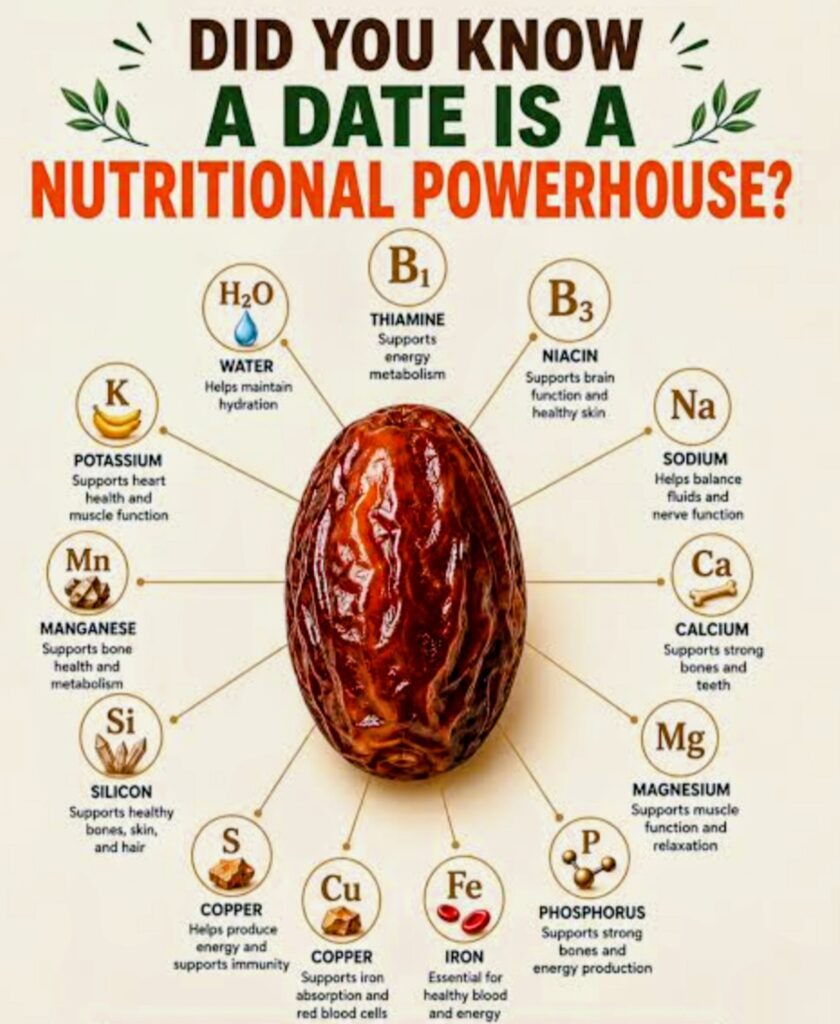
Dates are rich in potassium and magnesium, which play a role in normal muscle and nerve function and blood pressure control. The fiber and antioxidant compounds in them can also help form a heart-healthy eating plan.
But dates alone don’t prevent heart disease; it’s the overall diet, exercise, and other lifestyle factors that make a difference.
4. Rich in Antioxidant Compounds
Dates have several types of antioxidants in them. Even though it would be a stretch to call dates the cure for chronic diseases, the antioxidants in dates do help to prevent cell damage from oxidative stress.
5. Useful as an Alternative to Refined Sweets
This can be one of the most useful ones. Rather than adding a tonne of refined sugar to at-home energy balls or dessert, chopped dates can be used to sweeten and add fibre and minerals.
However, “natural sugar” is not “unlimited sugar.” As with all fruits, dates are high in calories, so control your serving size.
What About Dates and Blood Sugar?
Dates are extremely sweet but contain fiber, which affects the rate at which their carbohydrates are absorbed. There have been some studies indicating that dates may be relatively low- to moderate-glycemic foods, depending on the variety and serving size. But a person with diabetes should never consider dates as “free food.” They still contain carbohydrates, and some people’s blood-glucose levels are different from others.
How Many Dates Should You Eat?
This is not a right or wrong amount for anybody. One way to do this is to keep serving sizes sensible and factor in the amount of calories and carbohydrates you consume throughout the day. Dating with protein or healthy fats like unsweetened yogurt or nuts can be a more well-rounded snack.
The Bottom Line
While dates have been named a nutritious fruit, they are no magic food. They contain a mix of fiber, minerals, natural carbohydrates, and antioxidants that make them a valuable ingredient in a well-balanced diet. Best eaten in 2026 as a healthy food, not an unlimited healthy sweet.
Including a small portion of fruit in diets, with nuts and yoghurt, oats, or fruit, can be a quick and convenient way to add some natural sweetness and useful nutrients to the diet of most people. Diabetics, people with kidney disease, or people with specific dietary restrictions should take into consideration their specific nutrition needs and require professional advice if needed.
About the Author