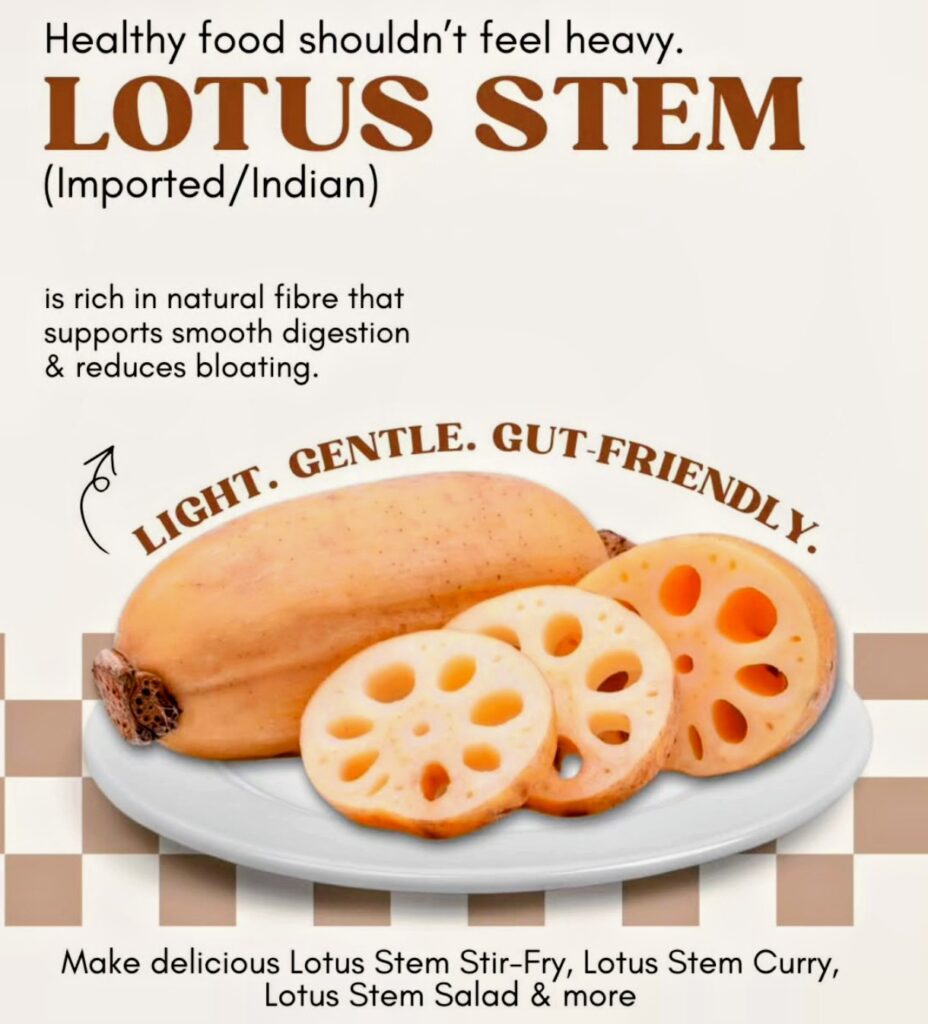
Lotus stem, commonly known as lotus root or kamal kakdi, is a popular vegetable used in Indian and other Asian cuisines. A healthy food source rich in dietary fiber, vitamin C, potassium, minerals, and different plant components. In 2026, it is not regarded as a medicine, but as a healthy food.
1. Supports Digestive Health
Lotus stem is an excellent source of food fiber. Fiber may help with regular bowel movements, support digestive function, and help maintain overall gastrointestinal health.
2. Helps Support Heart Health
The potassium in lotus root helps normalize blood pressure and supports normal muscle and nerve activity. Vegetables that are high in potassium are an important part of a well-balanced diet and help to promote the health of the cardiovascular system.
3. Provides Antioxidant Protection
Lotus has vitamin C and polyphenolic and flavonoid compounds. These can have antioxidant effects to safeguard cells against oxidative stress.
4. Supports Immune Function
Vitamin C is an important nutrient for normal immune-system function. Lotus stem can be a part of a diverse diet to help meet the daily vitamin C requirement.
5. May Assist in Weight Management
Lotus stem is a fibrous food ingredient that has relatively low fat and calorie content when cooked in less oil. Fiber can help to keep you feeling full, which might help you control your food consumption.
6. Supports Healthy Blood Sugar Management
Lotus stem can be considered in balanced meals, focusing on vegetables and other foods with high fiber content, due to its content of dietary fibre and carbohydrates. It is not a diabetes treatment, however, and is not a substitute for treatment prescribed by a physician.
7. Contributes to Bone and Mineral Health
Lotus stem is a source of minerals such as calcium, magnesium, phosphorus, manganese and potassium. These nutrients serve a key function in the proper development of bones, muscles and other body processes.
8. Supports Healthy Skin
Vitamin C helps to make collagen and maintain normal skin structure. Lotus stem, however, cannot be used to treat skin conditions, and the antioxidant compounds in it might also be used to help prevent oxidative stress.
9. May Aid to decrease oxidative stress
Antioxidant activity has been reported for lotus and the potential bioactive compounds, including polyphenols and flavonoids. These findings indicate some health-promoting properties, but a majority of the evidence is based on laboratory and preclinical studies and not clinical trials conducted in humans.
10. Supplies a variety of key nutrients
Lotus stem is rich in carbohydrates, fibre, vitamin C, potassium, iron, magnesium and other micronutrients. According to nutrition data derived from USDA information, raw lotus root has 4.9 g of fibre and 556 mg of potassium per 100 g.
Nutritional Value of Lotus Stem
Boiled lotus root is a good source of vitamin C, fibre, potassium, and vitamin B6, and is low in fat. The nutritional profile may differ based on whether it is raw, boiled, salted, fried, or mixed with other ingredients.
The lotus stem is edible
Lotus stem can be used as a curry, in soups, stir-fries, and salads. When reducing the overall calorie and fat content of a meal, eating it lightly steamed, boiled, or lightly cooked is better than eating it deep-fried. Cooking and washing are also significant, as raw or improperly washed lotus root is a food-safety hazard.
Conclusion
Lotus stem is a versatile, nutritious vegetable that can support improved digestion, antioxidants, immunity, heart health, and overall nutrition. It works best as part of a diverse and balanced diet. Based on studies published on lotus-based compounds, biological activities have been reported; however, lotus stem cannot be used as a remedy for any disease.
About the Author