
Hinduism is known for its many diverse practices across the world. The Hindu traditions are based on the Vedas, Upanishads, epics, Puranas, temple traditions, and regional practices and do not adhere to a single form of worship. So many understandings of the Hindus exist in terms of the divine.
Hindu Understanding of the Idea of Divine
An important concept in Hinduism is Brahman, which refers to the ultimate reality beyond everything else. Atman, another significant idea, refers to the self. How Atman and Brahman are connected depends on the philosophical school one refers to.
Because Hindu traditions recognize many divine forms, Hinduism is sometimes described as polytheistic. However, the source tradition also describes elements of monotheism and henotheism, in which different deities may be approached as the highest divine reality within particular devotional traditions. The Brihadaranyaka Upanishad, for example, presents a progression from many gods toward the idea of one ultimate Self.
The Trimurti: Brahma, Vishnu and Shiva
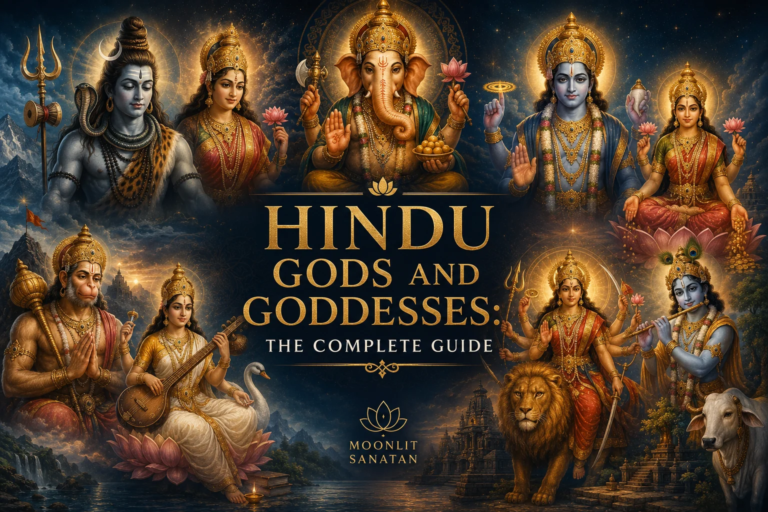
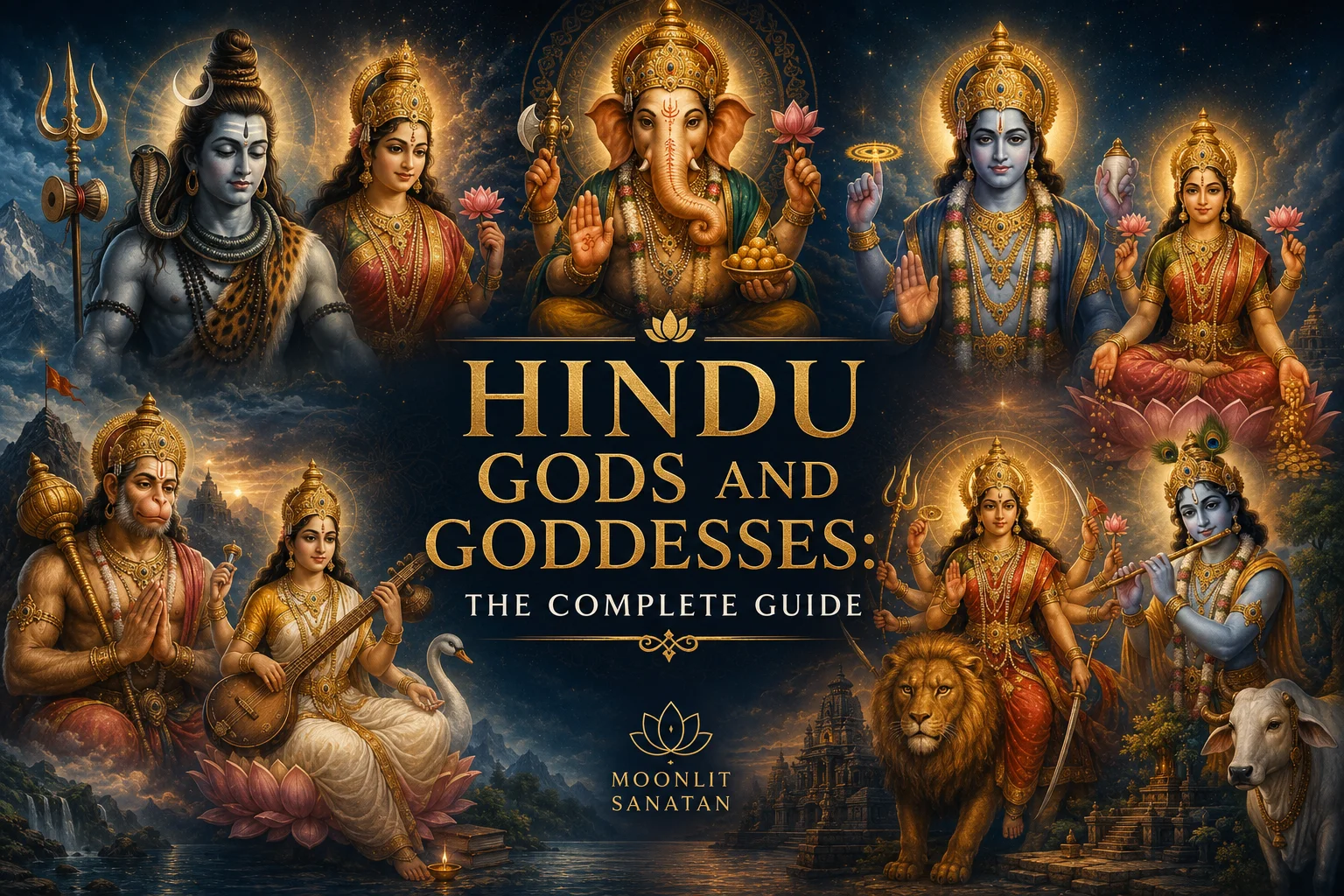
Three widely recognized deities are Brahma, Vishnu and Shiva, commonly called the Trimurti.
Brahma is associated with creation and is traditionally described as the creator. Although prominent in earlier traditions, his temple worship is relatively limited compared with Vishnu and Shiva.
Vishnu is traditionally associated with preservation and protection. Vaishnava traditions regard him as the supreme divine reality and emphasize his many forms and incarnations. Rama and Krishna are amongst his most recognized forms, while Narasimha and Vamana are of great significance as well.
Shiva is mainly associated with destruction and transformation, yet in Shaiva traditions he is viewed as the Supreme Self and the ultimate reality. He has many forms such as Nataraja, Dakshinamurthy, and Ardhanarishvara.
Important Goddesses and Shakti
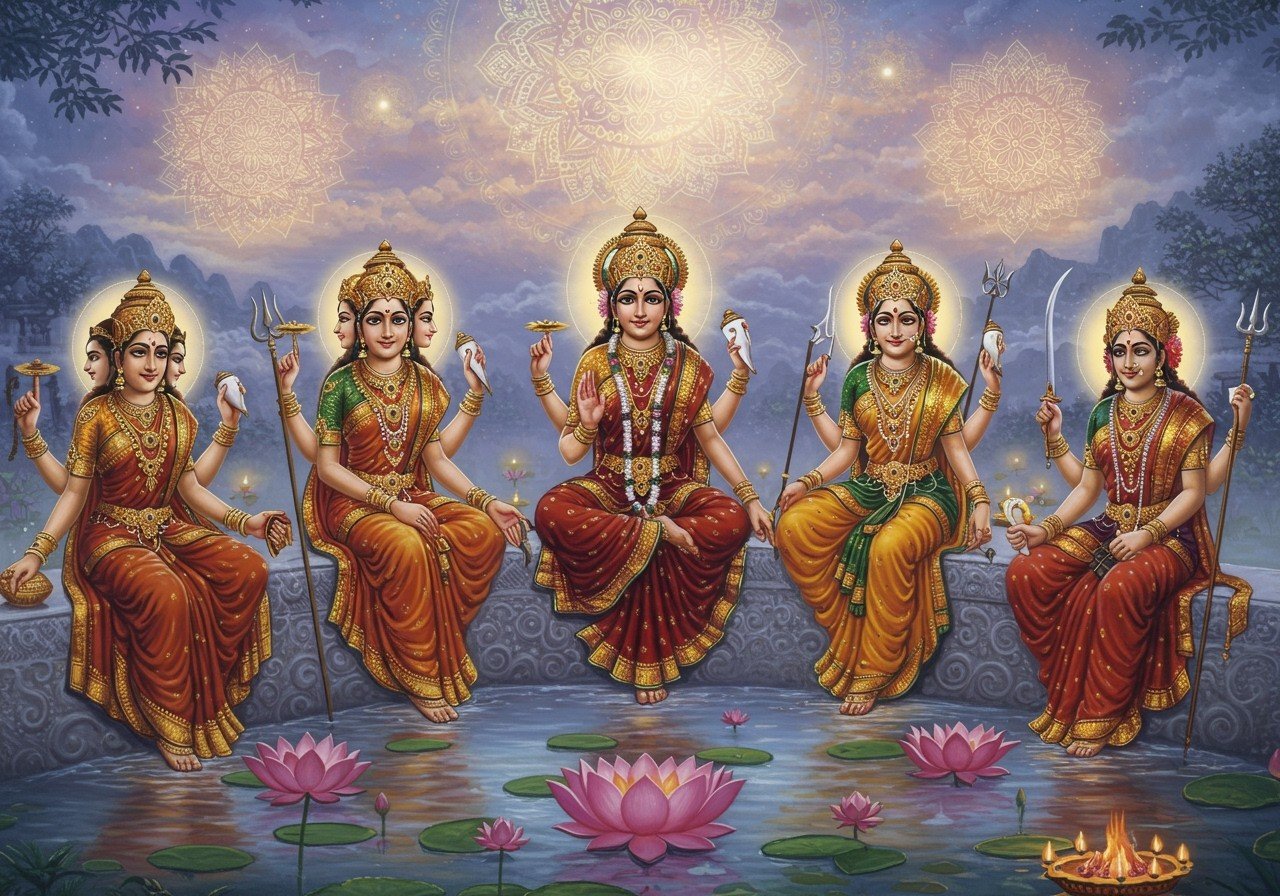
The feminine aspect of the divine holds an equally important role in Hindu traditions. Different traditions view Shakti, or the divine energy or the divine power, as the source of creation and manifestation.
Saraswati is associated with learning and knowledge, arts and wisdom. She is usually shown playing the veena and is especially important to students and artists.
Lakshmi is identified with abundance, prosperity, well-being, and all good things and is traditionally associated with Vishnu. It is thought that the eight major forms of Lakshmi are called Ashta Lakshmis.
Parvati is associated with Shiva and covers different aspects of the Divine Mother. It is believed that she appears as Durga, Kali, and Lalita, and each form has its own meaning and role in worship.
Important Vedic Deities
The Vedas contain hymns dedicated to numerous deities who played important roles in early Hindu religious practice. Indra was a prominent warrior and celestial deity, while Agni represented fire and served an important role in sacrificial rituals. Vayu was associated with wind and breath, and Surya with the sun and illumination. Varuna was connected with cosmic and moral order as well as waters.
Other Vedic figures include Soma, the Ashvins, Aditi, the Adityas, Ushas, Yama, the Maruts, Rudra, Brihaspati and the Vasus. Their importance and roles changed across different periods of Hindu religious history.
Ganesha, Hanuman and Other Popular Deities
Some deities have become especially prominent in everyday Hindu worship. Ganesha, recognized by his elephant head, is associated with wisdom and the removal of obstacles and is traditionally invoked at the beginning of many religious ceremonies. Hanuman, a central figure in the Ramayana, is celebrated for devotion, courage, and service to Rama. Garuda, the eagle-like divine figure, is traditionally associated with Vishnu, while Nandi, the sacred bull, is closely connected with Shiva.
Vishnu’s Avatars
One of the best-known Hindu theological ideas is the avatar, referring to the descent or manifestation of a deity in a particular form. Vishnu is traditionally associated with several avatars, including Matsya, Kurma, Varaha, Narasimha, Vamana, Parashurama, Rama, Krishna and Kalki. Different Hindu traditions vary in how these lists are presented and interpreted.
Sacred Nature, Symbols and Local Traditions
Hindu worship extends beyond major temple deities. Many traditions honor sacred rivers, mountains, trees, serpents, ancestors, saints and symbolic objects. Rivers such as the Ganga, Yamuna, Narmada and Godavari have important religious significance, while sacred trees and mountains also appear in devotional practices.
About the Author