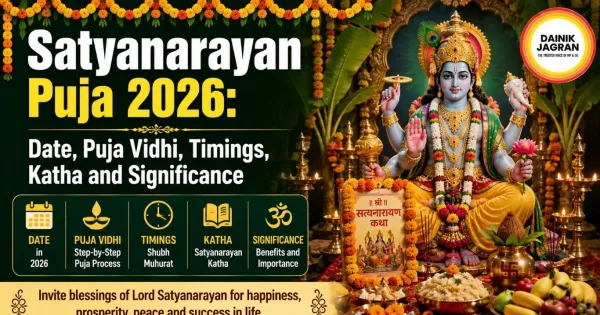

Sri Satyanarayana Puja, also known as Sri Satyanarayana Vratam, is a traditional Hindu worship practice dedicated to Sri Satyanarayana Swami, a form of Lord Vishnu associated with truth, righteousness, and divine grace. Families commonly perform the puja during auspicious occasions, religious observances, and important milestones. Devotees traditionally undertake the vratam with faith, seeking spiritual strength, peace, and support while facing difficulties or beginning a new phase of life.
When Is Satyanarayana Puja Performed?
The ritual is particularly popular in several parts of India, including Andhra Pradesh, Telangana, Maharashtra, Gujarat and West Bengal. The temple of Sri Satyanarayana Swami at Annavaram in Andhra Pradesh is an important pilgrimage destination associated with this tradition.
Families may perform the puja on occasions such as entering a new home, purchasing property, beginning a business, securing employment, marriage, childbirth, or other significant life events. It may also be observed on traditionally auspicious days, including Purnima and Ekadashi. The Satyanarayana Katha, or sacred stories connected with the vratam, is traditionally associated with the Skanda Purana, although there are discussions about the historical development of these narratives.
How Is the Puja Performed?
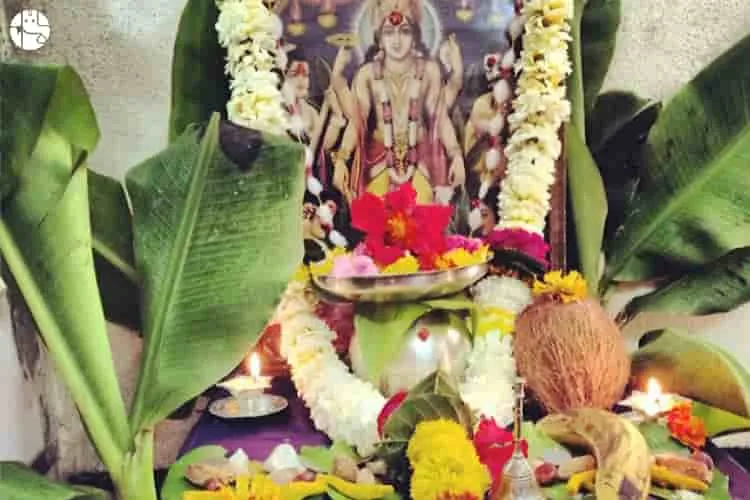
The ceremony can be performed either at a residential place or at the temple, depending on the preferences of the family. Whether the officiant priest will be present or not is entirely up to the family. Before the commencement of rituals, the designated area must first be prepared with the kalasha symbolizing the Sri Satyanarayana deity along with flowers, grains, turmeric powder, kumkum, betel leaves, etc.
The different worship methods in this ceremony usually start with prayers to Lord Ganesh and Navagraha. The offerings include flowers, fruits, water, coconuts, incense sticks, dressed clothes, etc. After the offerings have been made, the devotees start chanting prayers and offerings and finally end the ceremony with the chanting of the Satyanarayana Katha.
Philosophy of the Ritual
The word “Satyanarayana” itself is comprised of two parts: “Sat,” which means to exist, and “Narayana,” which refers to God.
Thus, we can understand Sri Satyanarayana as the representation of truth or true life on earth. Hence, doing puja can mean not only performing a ceremony, but also making a vow to adhere to the principle of honesty, as well as responsibility and dharma.
The tradition emphasizes that spiritual practice involves the mind and heart as well as physical actions. People might do a complex puja, but the real significance of it shows in their daily life. Honesty, keeping their word, performing their obligations, and treating others fairly are some important aspects of devotion.
Lessons From The Stories in Satyanarayana Katha
The tales typically presented in puja convey the same message. The characters described in the stories have to go through troubles as a result of not complying with one’s promises, cheating someone, or violating the rules of the vratam. Their circumstances improve when they realize their mistakes and start acting honestly.
One story describes a poor Brahmin who is instructed to worship Satyanarayan, and his fate changes for the better. The other one is about a wealthy merchant who is granted a child, but then people face problems after failing to keep their promise. One episode involves the merchant having trouble after lying about his ship, and only after he confesses to the wrongdoing is everything restored.
The stories presented show that integrity is treated not only as a ceremonial requirement but also as a moral value.
Why Satyanarayana Puja Remains Relevant

The continuing importance of Sri Satyanarayana Puja can be understood through its combination of ritual, storytelling, and ethical teaching. For believers, the event offers a chance to express thanks, look for divine help, and engage in self-examination.
The main teaching of the religious occasion is that worship may not stop at sacrifices made in front of the deity. Truthfulness, honesty, care for others, and proper conduct are also forms of worship. Thus, the VRATAM reminds one that the development of spirituality depends on immediately practicing true values.
About the Author