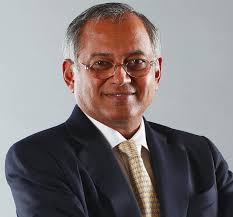
Venu Srinivasan

Venu Srinivasan is a name that is brought up time and again as that of India’s preeminent business leader. What he did for the Indian two-wheeler segment is what a few do for an industry; he did that and more. Also known for his social responsibility and forward thinking, in 2026, he is still very much a source of inspiration to the young entrepreneurs in the country, which is a large scale of what he achieved in his career.
Born into the TVS family, which is a prestigious one founded by T. V. Sundaram Iyengar, Vennu Srinivasan was born on December 11, 1952, in Chennai, Tamil Nadu. He did his engineering from the College of Engineering Guindy and later obtained a master’s degree in management from Purdue University in the U.S. His education played a role in bringing in modern business concepts and global manufacturing practices to India.
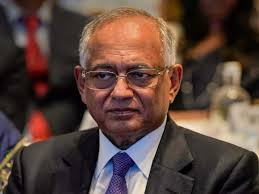
Leadership Journey at TVS Motor
In 1979, Venu Srinivasan took over at Sundaram-Clayton and later had a key role in the growth of TVS Motor Company into one of India’s leading auto players. Under his watch, the company put quality, innovation, and customer care at the forefront.
One of his major accomplishments was introducing Total Quality Management (TQM) practices, which were inspired by Japanese manufacturing models. This approach saw TVS Motor Company take the world stage when, in 2002, they won the very competitive Deming Prize, which at the time was only given to a two-wheeler company. Also, he put an emphasis on discipline, technology, and continuous improvement, which made TVS a respected global brand.
Commitment to Society and Rural Development
Apart from industrial success, Venu Srinivasan is also very much into social welfare. Through the Srinivasan Services Trust, with which he has been associated, we see him reach out to thousands of villages in India. The trust, which has a wide range of programs in health care, women empowerment, water conservation, environment protection, agriculture, and education, is his social initiative.
He is into the world of philanthropy, which is out of his belief that companies have a role to play in bettering society beyond what they put into it. Also, he has been a supporter of the restoration of old temples and cultural heritage projects in India.
Awards and Recognition
Over the years, Venu Srinivasan has been recognized with many distinguished awards for his work in industry and society. In 2010, he received the Padma Shri, and in 2020 was awarded the Padma Bhushan by the Government of India. Also, he served as a key member of the boards at Tata Trusts and Confederation of Indian Industry (CII).
Conclusion
In 2026, Venu Srinivasan is still the epitome of visionary leadership, ethical business practices, and social responsibility. His story of growth from a dedicated entrepreneur to a world-recognized industrialist is proof that success, which also includes a positive social impact, is the most meaningful.
About the Author