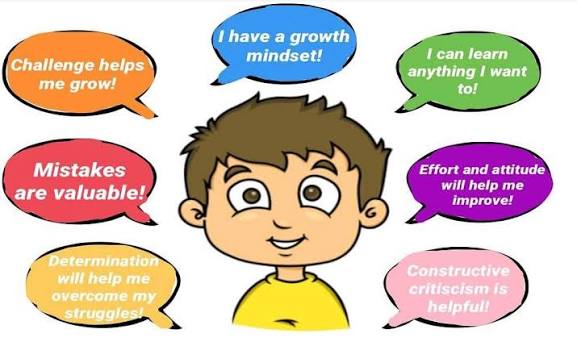

Education is not only about helping children achieve good grades; it is also about shaping how they respond to challenges, mistakes, and new experiences. For parents exploring the best schools in HSR Layout, an important consideration is whether the learning environment encourages children to believe that abilities can develop through effort, reflection, practice, and guidance.
A growth mindset can help students approach difficult tasks with greater confidence, learn from setbacks, and remain curious when answers are not immediately obvious.
Understanding What a Growth Mindset Means
A growth mindset is the belief that skills and abilities are not necessarily fixed. Children with this outlook can learn to see challenges as opportunities to improve rather than as evidence that they are incapable.
For example, a student who finds mathematics difficult may think, “I am not good at maths.” A growth-oriented approach encourages a different response: “I have not understood this yet, but I can practise and seek help.”
This shift in thinking can influence how children approach academics, relationships, sports, creative activities, and unfamiliar situations. However, developing such an attitude requires consistent encouragement rather than simply telling students to “try harder.”
Create a Classroom Culture That Values Effort and Progress
The classroom plays a major role in shaping how students respond to difficulty. Teachers can encourage growth by recognising preparation, persistence, improvement, and thoughtful approaches to problems instead of focusing exclusively on final outcomes.
Specific feedback can be particularly valuable. Rather than simply saying that an answer is correct or incorrect, teachers can help students understand what worked, where their reasoning changed, and what they could try next.
A child who receives constructive feedback gradually learns that mistakes can provide useful information. This can make students more willing to participate, ask questions, attempt challenging activities, and revise their work.
Make Mistakes Part of Learning
Children can sometimes avoid difficult tasks because they fear being wrong. If mistakes are treated as failures, students may become reluctant to experiment or express unfamiliar ideas.
Schools can change this perception by creating opportunities where students can test ideas, identify errors, and improve their work. Project-based assignments, experiments, classroom discussions, and creative tasks can naturally provide such opportunities.
The objective is not to celebrate every mistake but to help children understand what they can learn from one. When students reflect on an unsuccessful attempt and identify a better approach, they develop persistence and problem-solving skills.
Encourage Students to Take on Appropriate Challenges
Growth happens when children encounter tasks that stretch their existing abilities without becoming overwhelming. A supportive school environment can gradually introduce increasingly complex problems, assignments, and responsibilities.
Teachers can also encourage students to set achievable learning goals. Instead of concentrating only on marks, a child might work towards improving reading fluency, completing a more challenging project independently, speaking confidently before classmates, or mastering a difficult concept.
Such goals help students focus on progress. Over time, they can begin to recognise that improvement is often the result of consistent effort and practice.
Connect Learning With Real Experiences
Children are more likely to understand the value of persistence when they can see how learning applies beyond textbooks. Practical activities can give students opportunities to experiment, collaborate, solve problems, and adjust their approaches.
For parents evaluating schools in HSR Layout, this aspect can be useful when comparing learning environments. A school that provides opportunities across academics, sports, arts, projects, and other activities can give children different situations in which to practise resilience and perseverance.
Sports, for instance, can teach students how to respond to setbacks, while performing arts can help them build confidence through preparation and practice. Group projects can demonstrate the importance of listening, adapting, and contributing to a shared goal.
Give Students Opportunities to Make Decisions
A growth mindset is also connected with independence. When children are given age-appropriate choices, they can learn to evaluate options, take responsibility, and understand the consequences of their decisions.
Schools can encourage this through classroom responsibilities, student-led activities, project choices, leadership opportunities, and collaborative assignments. These experiences allow children to discover that they can influence outcomes through thoughtful action.
Teachers still provide guidance, but students gradually learn to take greater ownership of their learning. This can strengthen confidence without creating the expectation that children must solve every problem independently.
Build a Supportive Approach to Academic Challenges
Academic difficulties are a normal part of learning. Some children may struggle with a particular concept, while others may find it difficult to organise their work or manage examination pressure. A growth-oriented environment can help students treat these difficulties as areas for development.
Teachers can break complex tasks into manageable steps, provide timely feedback, encourage questions, and help students identify strategies that work for them. Peer learning can also allow students to explain ideas to one another and discover alternative ways of approaching a problem.
The goal is to ensure that additional support does not make children feel incapable. Instead, it should reinforce the message that learning can progress with the right strategies, guidance, and sustained effort.
Parents and Schools Can Reinforce the Same Message
A growth mindset develops more effectively when children receive consistent messages at school and at home. Parents can ask questions such as, “What did you learn from that?” or “What could you try differently next time?” rather than focusing only on whether a task was successful.
It is equally important to avoid comparing children constantly with their peers. Each child develops at a different pace, and meaningful progress may look different from one student to another.
Schools and families can instead celebrate perseverance, curiosity, responsible effort, improvement, and willingness to learn. This creates a healthier understanding of achievement.
Conclusion
A growth mindset does not mean believing that every challenge can be solved instantly. It means helping children understand that learning involves practice, setbacks, feedback, curiosity, and continuous improvement. For parents considering the best schools in HSR Layout, looking beyond academic outcomes to examine how a school supports perseverance, independence, collaboration, and personal development can offer a more complete picture of its educational approach.
EuroSchool offers a learning environment that combines academic development with concept-based learning, sports, performing arts, digital learning, and social-emotional learning. Its approach includes opportunities designed to support confidence, creativity, responsible decision-making, and well-rounded student development, making it a relevant option for families seeking a balanced educational experience.
About the Author