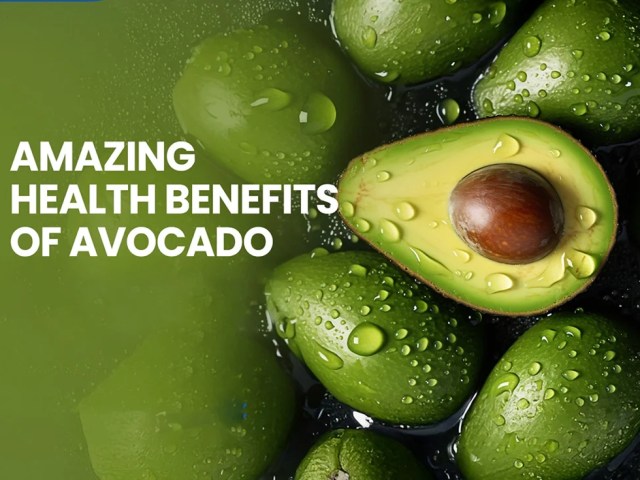

Avocado is a nutrient-dense fruit that is high in healthy monounsaturated fats, dietary fibre, potassium, and several vitamins and other beneficial compounds. It can offer a number of health benefits when part of a healthy diet.
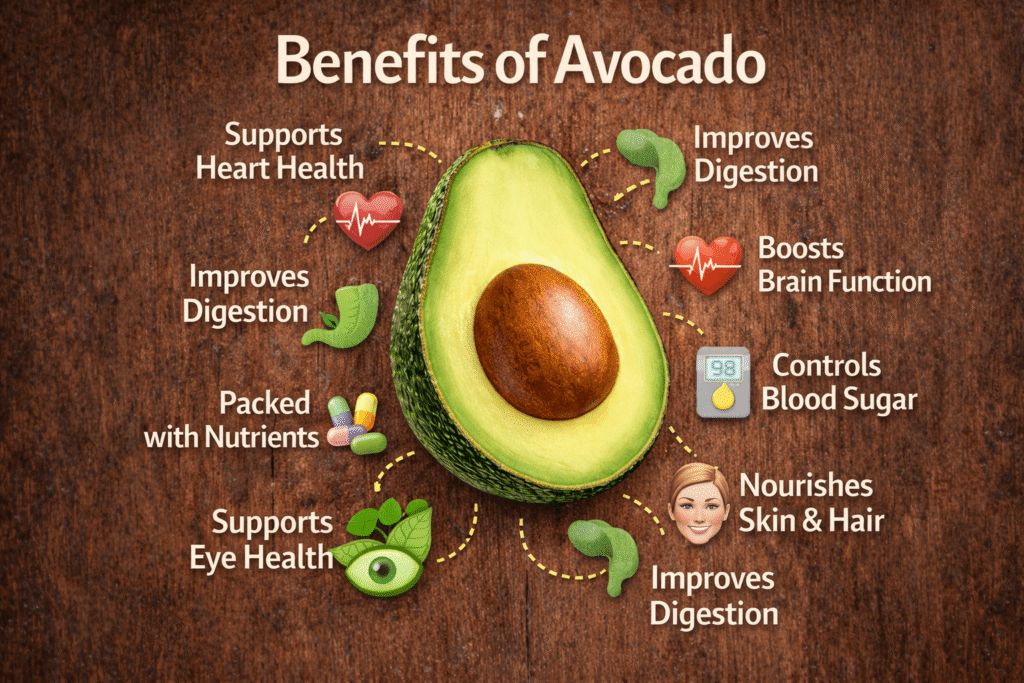
1. Supports Heart Health
Avocado offers monounsaturated fats, which can be part of a healthy heart diet. Studies have linked eating avocados regularly to a reduced risk for cardiovascular diseases, but this does not mean that eating avocados can prevent heart disease.
2. Provides Dietary Fibre
Avocado provides a normal digestive fibre content and is an important source of dietary fibre. A 67-68 g serving contains approximately 4.6 g of fibre.
3. Helps Provide Potassium
Avocado is rich in potassium, which is crucial for normal cell function and fluid balance. Potassium is also linked to healthy blood pressure, as part of a healthy diet.
4. Supplies necessary vitamins and minerals
Avocado provides nutrients such as vitamins C, E, and K, folate, magnesium, and potassium. These nutrients support normal body functions and aid in maintaining a balanced diet.
5. Contains Healthy Fats
Avocado is quite fatty compared with many fruits, with a fairly high proportion of monounsaturated fatty acids. Swapping out foods that are high in saturated fat with foods that are good sources of unsaturated fat can be incorporated into a heart-healthy eating pattern.
Conclusion
Avocado can be part of a healthy diet due to its healthy fats, fibre, potassium, vitamins and minerals. It is, however, relatively calorie-rich, so amount and diet should be taken into account.
About the Author