
Starting out a family is a very exciting time in life, but maternity or pregnancy and delivery also bring with them great medical expenses. From routine checkups and diagnostic tests to hospitalization and delivery, the total cost adds up, which in some cases may be hard to manage, especially when complications arise that require extra treatment. This is what maternity benefits in health insurance are for.
In 2026, health insurance policies will cover maternity, which is either a standard feature or an add-on. But what is covered, waiting periods, limits, and exclusions vary between companies. Thus, it is important to research the main benefits prior to purchase.
Here is what you should look for in a health insurance policy regarding maternity care.
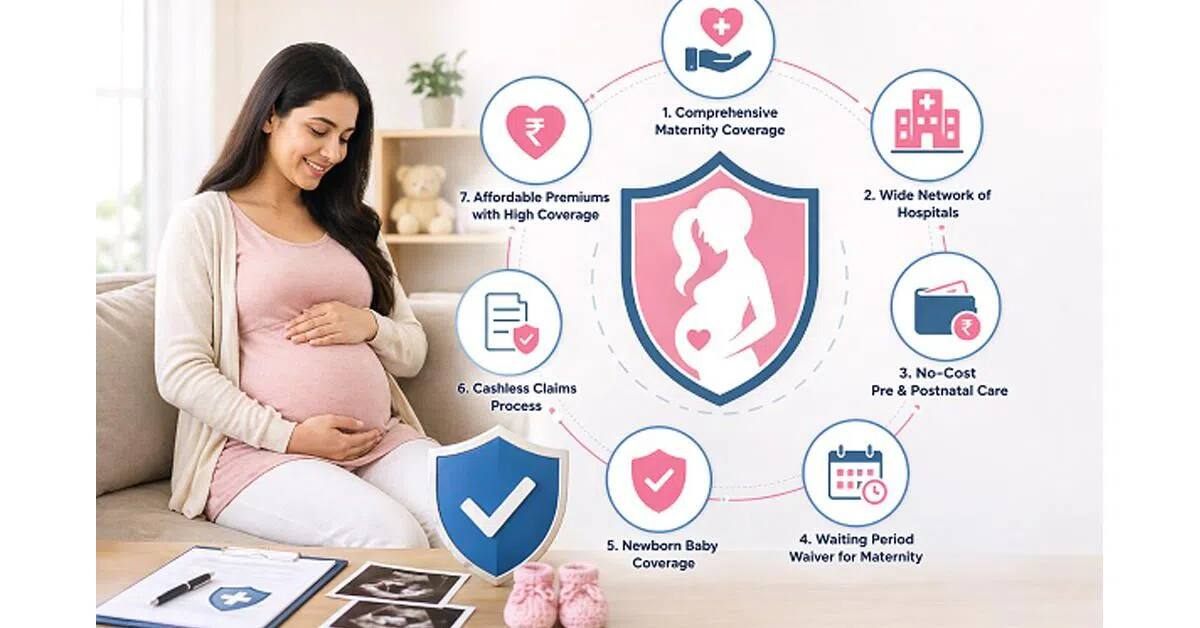
1. Coverage for Normal Delivery
Maternity insurance, which is a key benefit, covers the financial aspect of normal delivery. Also, based on the policy, what is covered in terms of hospitalization related to delivery may vary and is up to the named maternity limit.
This may lower what we pay out of pocket, which in turn allows for more attention to be given to mother and baby.

2. Coverage for Caesarean Delivery
A C-section tends to be much more expensive than a routine delivery, particularly in private hospitals. Maternity benefits should thus include coverage of what is medically necessary for Caesarean delivery.
However, we see that policyholders should pay attention to the maternity sub-limit. A policy which has a large sum insured in total may still have a much smaller separate limit for maternity issues.
3. Pre-Natal and Post-Natal Expenses
Pregnancy health care is a full spectrum that does not include only hospital admission. Outpatient visits, tests, and follow-up care also factor into the total cost.
Some maternity plans cover pre- and post-natal medical expenses which are defined in the policy. What also varies is the duration of coverage and which expenses are eligible, so it is best to check the policy terms before you buy.
4. Newborn Baby Coverage
Another value is that we have coverage for the newborn. Some health insurance plans include a baby under their care for a time after birth, which also covers treatment of some medical conditions.
The scope of health coverage for newborns varies by plan. Some insurances cover from day one of birth, while others may only include a certain number of days or months. Also, parents should verify at what point and what process is required to add the baby to the health insurance policy.
5. Coverage for Pregnancy Complications
Pregnancy at times may bring about unanticipated health issues which require hospital stay or special care. As per the policy language, maternity-related issues may be included if they meet the insurer’s terms.
This benefit also may not be available at all times, as health issues that are out of the blue can raise the total cost of pregnancy. Also, it is of great importance that you read the terms, conditions and exclusions very carefully before assuming all pregnancy-related expenses will be covered.
Support of Assisted Reproductive Technologies.
Some maternity-oriented insurance products do cover assisted reproductive procedures or fertility treatments. But this is not a universal feature.
If you are looking into fertility treatment for your family planning goals, check what the policy includes in terms of procedures like assisted reproductive technology; also see which conditions are set for what will be covered, which are the eligibility requirements, and what the wait times are.
Vaccine and Newborn Health Benefits.
Healthcare coverage post-pregnancy is a thing that may continue into the baby’s first few months. What is included in maternity health insurance varies by company but may cover some newborn health care and vaccination-related issues.
Between different health plans, coverage varies greatly, so parents should look at the benefit schedule, which details what is covered, instead of assuming that all pediatric expenses and vaccinations will be included.
Health Care Affordability Against Rising Medical Bills.
Sure, here is the paraphrased version of that passage: Maternity insurance’s greatest benefit is that it is a tool for financial planning. What we see is that health care costs related to pregnancy may, in fact, be very different by city, by hospital, and by what kind of care is given. What a good policy does is help families put away what they will need without having to dip into their reserves all at once.
However, the best time is before you become pregnant for maternity insurance. Wait periods may be from 9 to 48 months, which varies by the policy. By the time you are pregnant, it may be too late to get the coverage you are looking for.

What to check first before purchase?
Before you choose a maternity health plan for 2026, do your research beyond just the premium. Look at the maternity waiting period, delivery sub-limit, C-section coverage, what they include for the baby, pre- and postnatal coverage, what is excluded, which hospitals are included in the network, and the claim process.
Also bear in mind that the group insurance which is provided by the employer may have different terms from what is presented in individual policies. Thus, it is up to the employee to read through the company’s policy documents, which are the best source of information, rather than to assume that all maternity expenses are covered.
Conclusion
Mat’ leave insurance is a key element of financial planning for couples that are getting ready to start or add to their family. We see that it also includes things like normal delivery coverage, C-sections, pre- and post-birth care, newborn coverage, and some fertility treatments, which in turn does away with the financial stress associated with childbirth.
The best policies may not be the ones with the lowest premium. In fact, we see value in a balance between the waiting period, coverage limits, what is included for newborn issues, and what is left out. Also, it is very important to purchase that policy at the very start of your search once you identify what you need, and also to study the fine print before you decide.
Through proper planning, maternity health insurance can provide for greater peace of mind during what is also one of life’s most important times.
About the Author