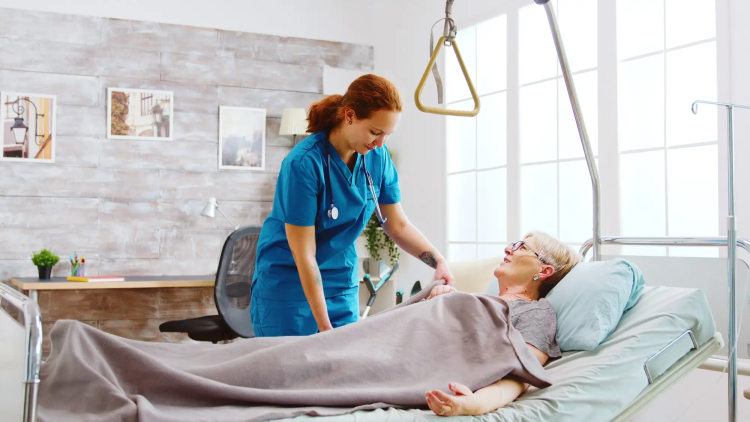

Recovery at home sounds straightforward. Your parent leaves the hospital. They are back in familiar surroundings. Everyone assumes the hard part is over.
It is not.
The first few weeks at home after a surgery, illness, or health event are actually some of the most important weeks in your parent’s recovery. What happens during this period directly affects how well and how quickly your parent gets better. And most families are not fully prepared for what this actually involves.
Two Different Kinds of Support
Families often think of home recovery care as one thing. Someone comes, helps around the house, and keeps your parents company. But proper recovery at home actually needs two distinct types of support working alongside each other.
A nursing attendant handles the daily medical and personal care. A physiotherapist handles the physical rehabilitation. These are different skills. Different training. Different roles. And your parent genuinely needs both.
Understanding what each one does helps families set things up properly from the beginning.
What a Nursing Attendant Actually Does
A nursing attendant is not just a helper. They are trained in clinical care. After surgery or illness, your parent has specific medical needs every single day.
Wound dressing needs to be done correctly. Medicines need to come at exact times without fail. Vital signs need monitoring. Catheters or medical equipment need proper management. Your parent needs safe assistance with bathing, movement, and personal hygiene.
A nursing attendant handles all of this. They watch your parents’ condition throughout the day. They notice when something is slightly different from the day before. They communicate changes to the doctor before a small issue becomes something bigger.
Families in Bangalore who arrange proper nursing attendant support find that their parents’ post-discharge period is significantly more stable. Complications that commonly happen at home get caught early. Infections get noticed before they escalate. Your parent feels genuinely looked after rather than just getting by.
What Physiotherapy Adds
This is where recovery actually moves forward. A nursing attendant keeps your parent safe and medically stable. A physiotherapist gets your parent moving again properly.
Physiotherapy at home during recovery works on rebuilding what your parent has lost. Muscle strength that reduced during hospitalisation. Balance that needs retraining. Movement patterns that need to be relearned safely after surgery.
The physiotherapist assesses where your parent is right now. They build a programme around that starting point. They come regularly. They track progress. They adjust as your parent improves.
This is not a generic exercise. It is guided rehabilitation designed specifically for your parent’s surgery, condition, and current ability. The difference in recovery outcomes between parents who have physiotherapy and those who do not is genuinely significant.
Why Bangalore Makes Home Care the Right Choice
Bangalore traffic is its own challenge. A parent recovering from surgery sitting in a car to reach a clinic in Koramangala or Whitefield is not ideal. They are tired. They are uncomfortable. They use up the energy they need for the actual therapy just getting there.
If you are searching for “physiotherapy at home Bangalore,” home-based sessions can make the recovery process easier for your parent. At home, the physiotherapist and nursing attendant both come to your parent. Your parent rests between sessions. Their energy goes into recovery rather than logistics.
The physiotherapist also works in your parents’ real environment. They see the actual spaces your parent will navigate once fully recovered.
When Both Work Together
Here is what families notice when nursing attendant care and at-home physiotherapy are both in place.
Your parent’s medical condition stays stable because the nursing attendant is watching daily. Your parent’s physical ability improves because the physiotherapist is working consistently. Small problems get caught before they become setbacks. Progress moves forward rather than stopping and starting.
Recovery becomes something structured and supported rather than something your parent and family are navigating alone.
Setting This Up Properly
Start with your parent’s doctor at discharge. Ask specifically what medical care your parent needs at home and what physiotherapy is recommended. Get clarity on the frequency of both.
Then find qualified services in Bangalore for each. Make sure the nursing attendant has proper training and experience. Make sure the physiotherapist has worked with elderly patients in post-operative recovery specifically.
The right combination of these two types of support gives your parent the best possible recovery at home. Your family gets peace of mind. Your parent gets genuinely better.
Please note: This article is general information only. It is not medical advice for your parent’s specific recovery needs. Every patient’s post-operative care must be guided by their treating doctor and specialist. Please consult your healthcare team before arranging any home care or physiotherapy programme.
About the Author