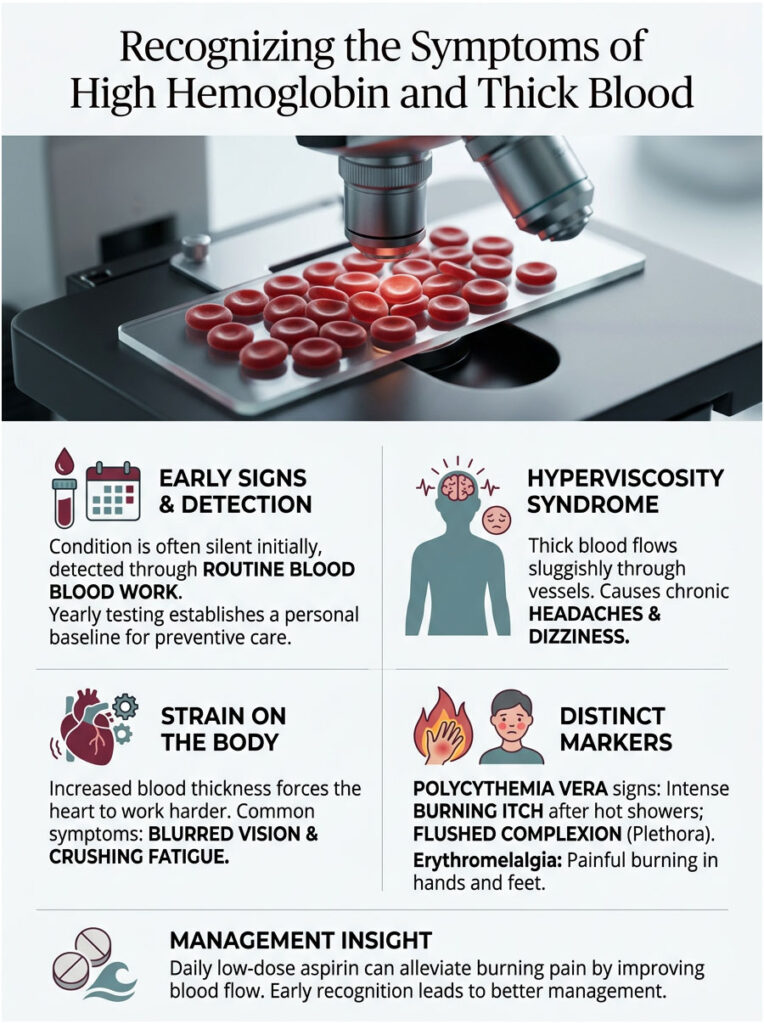

Hemoglobin plays an important role in red blood cells. It is a protein that transports oxygen from the lungs to all the other body organs and tissues. Lack of hemoglobin is harmful to one’s health, and very high amounts could indicate other issues such as dehydration, lack of oxygen, consequences of the treatment, or diseases.
It is worth mentioning that symptoms of a high amount may not be apparent at times. And in case they appear, they would depend on the level of hemoglobin increase and the reason for it.
Symptoms of a high level of hemoglobin
Hence, sometimes a person would say he/she has:
– headaches or feeling of pressure in the head;
– dizziness;
– great tiredness;
– blurry or distorted vision;
– breathing problems;
– flushed face, which is noticeably red;
– itching skin, especially when taking a warm bath;
– being more sweaty than usual;
– having palpitations and increased heart rate;
– sensation of numb hands and feet.
Nevertheless, those symptoms cannot be attributed just to the higher hemoglobin, as some of them make sense in relation to many other health issues.
What Does High Haemoglobin Mean?
High haemoglobin generally means that the concentration of haemoglobin in the blood is above the reference range for a person’s age and sex. It can occur because the body has produced more red blood cells or because the liquid portion of the blood has decreased.
For example, dehydration can temporarily make haemoglobin appear elevated because there is less plasma in the bloodstream. In other situations, the body may produce additional red blood cells to compensate for reduced oxygen availability.
A persistent elevation should therefore be evaluated rather than assumed to be caused by a single factor.
Causes and Risk Factors
:max_bytes(150000):strip_icc()/VWH-EllenLindner-DietandLifestyleChangesforHighHemoglobin-Standard-f5349f459b454963aee57d2ff44294ba.jpg)
Several circumstances can contribute to elevated haemoglobin levels.
Reduced Oxygen Availability
People living at high altitudes may naturally have higher haemoglobin because the body adapts to lower oxygen levels. Smoking and certain chronic lung conditions can have a similar effect.
Dehydration
Loss of fluids through inadequate intake, excessive sweating, vomiting, or diarrhoea can concentrate the blood and temporarily increase measured haemoglobin.
Sleep-Related Breathing Problems
Conditions such as obstructive sleep apnoea can repeatedly reduce oxygen levels during sleep. In some individuals, this may stimulate increased red blood cell production.
Medical Conditions
Certain kidney-related conditions and disorders affecting the bone marrow can cause excessive red blood cell production. Polycythaemia vera, for example, is a rare blood disorder in which the bone marrow produces too many blood cells.
Medicines and Hormones
Some medications or hormone treatments can increase red blood cell production. Anyone taking such medicines should discuss abnormal blood results with their doctor rather than stopping treatment independently.
When Should You Be Concerned?

A mildly abnormal result does not necessarily indicate a serious disease. Doctors typically interpret the level of haemoglobin together with other factors such as number of red blood cells, haematocrit, oxygen saturation, medical history, clinical signs, and laboratory results.
However, call for medical help urgently in case of sudden symptom development such as chest pain, trouble breathing, sudden weakness or numbness, confusion, or anything else that can indicate a serious complication.
How Is High Haemoglobin Diagnosed?
A complete blood count (CBC) is usually the first step in diagnosis. If the results are still high, the doctor checks the potential cause, paying attention to smoking, altitude, medications taken, symptoms of sleep apnea, oxygen levels, kidney function, and other factors.
Additional tests may be prescribed. Either looking for disorders of the blood or measuring erythropoietin levels can help pinpoint what exactly caused the increase.
How Can High Haemoglobin Be Managed?
Treatment depends entirely on the cause. If dehydration is responsible, restoring adequate fluid intake may help normalise the result. Addressing smoking, sleep apnoea, or an underlying lung or kidney condition may also be necessary.
In selected blood disorders, doctors may recommend treatments such as therapeutic phlebotomy to lower the number of circulating red blood cells. This should only be performed under medical supervision.
About the Author