
The red banana is a special kind of banana, which is notable for having reddish-purple skin, creamy white flesh, and natural sweetness. Red bananas tend to be smaller and heavier compared to the common yellow bananas and can have a slightly berry-like flavour.
Apart from being a unique fruit due to its colour, red bananas also offer dietary fibre, potassium, vitamin B6, vitamin C, magnesium, and antioxidants. These are nutrients that make red bananas one of the most nutritious fruits that can easily be added to your healthy diet.
Nutritional Content of Red Banana
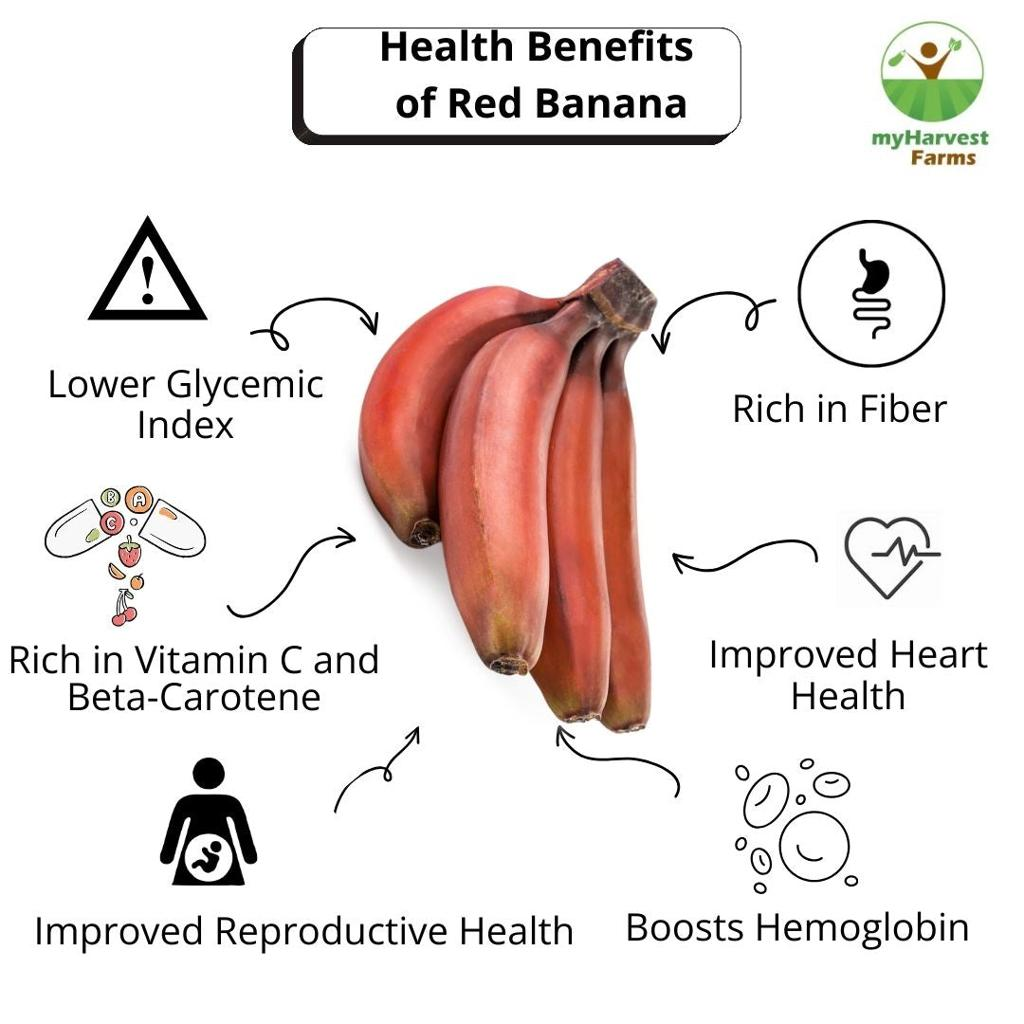
A small red banana weighing about 100 grams has about 90 calories, 21 grams of carbohydrates, 3 grams of dietary fibre, 1.3 grams of protein, and only small traces of fat.
It is also rich in minerals such as potassium, magnesium, vitamin B6, and vitamin C. Red bananas have natural plant compounds that are antioxidants like carotenoids.
1. Supports Digestive Health
Fibre is found in red bananas, allowing for healthy digestion and bowel movements.
There are different types of nutrients in bananas, such as fibre and resistant starch. There might be substances in red bananas that can work as prebiotics and provide nourishment to good bacteria within the digestive system.
As bananas ripen, the contents inside the fruit change, making it softer and sweeter.
2. Good For The Heart
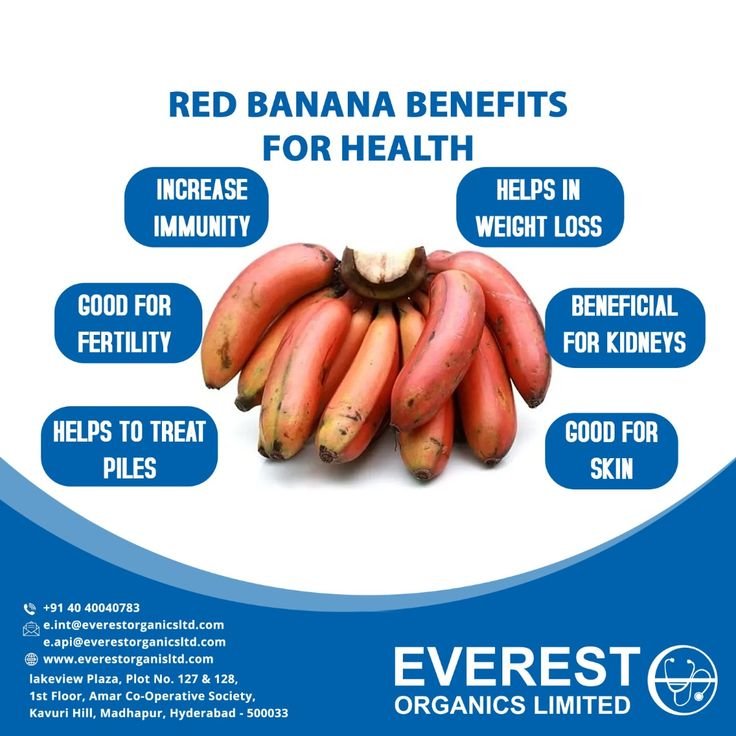
There are two nutrients in red bananas – potassium and magnesium, which are important for proper heart function.
Potassium is one of the substances needed to maintain fluid balance in the body. Potassium is essential in lowering high blood pressure levels. Eating fruits and vegetables high in potassium contributes to heart health.
Eating red bananas alone does not guarantee protection against high blood pressure and heart disease.
3. Provides Antioxidants
Red bananas include antioxidants like vitamin C and carotenoids that help fight oxidative stress that arises from free radicals.
Having a diet of various fruits and vegetables ensures a wide range of antioxidants; thus, a red banana should be seen as just one among the others in the diet.
4. Contributes to Proper Functioning of the Immune System
Vitamin C and vitamin B6 in red bananas play a significant role in maintaining proper functioning of the immune system.
Additionally, vitamin C contributes to collagen formation and protection against oxidative stress, while vitamin B6 takes part in various biochemical reactions in the body.
Incorporating healthy fruits into the diet will ensure you get the important micronutrients.
5. Supplies Natural Energy

Due to its carbohydrates and natural sugars, a red banana serves as an excellent source of energy.
It can be consumed before engaging in some physical activity or at any time of the day if you are looking for an energy snack.
Having bananas with nuts or even unsweetened yoghurt will give an energy-packed snack.
6. May Support Eye Health
The reddish colour of this banana results from naturally occurring carotenoid pigments. Carotenoids are a source of vitamin A in the body, which is needed to ensure proper vision.
Thus, the consumption of this fruit will allow for obtaining the nutrients needed for proper eye health; however, good vision needs a healthy diet as well.
7. Helps Maintain Healthy Skin
Red bananas contain vitamin C and antioxidants that contribute to maintaining normal skin health.
Vitamin C is necessary for collagen synthesis in the body, while antioxidants prevent cell damage due to oxidative stress.
Consuming red bananas along with vegetables, fruits, proteins, and fats will help you obtain nutrients that are needed for healthy skin.
8. May Assist in Weight Management
Red bananas will easily find their place in your weight management diet since they offer fibre and natural sweetness in an easy-to-consume serving.
Fibre can help you feel fuller, thus making this fruit even more satisfying than some sweet snacks, but keep in mind that weight management is dependent on total caloric intake, physical activity, and eating behaviour. Overeating any food leads to extra caloric intake.
Red Banana vs. Yellow Banana
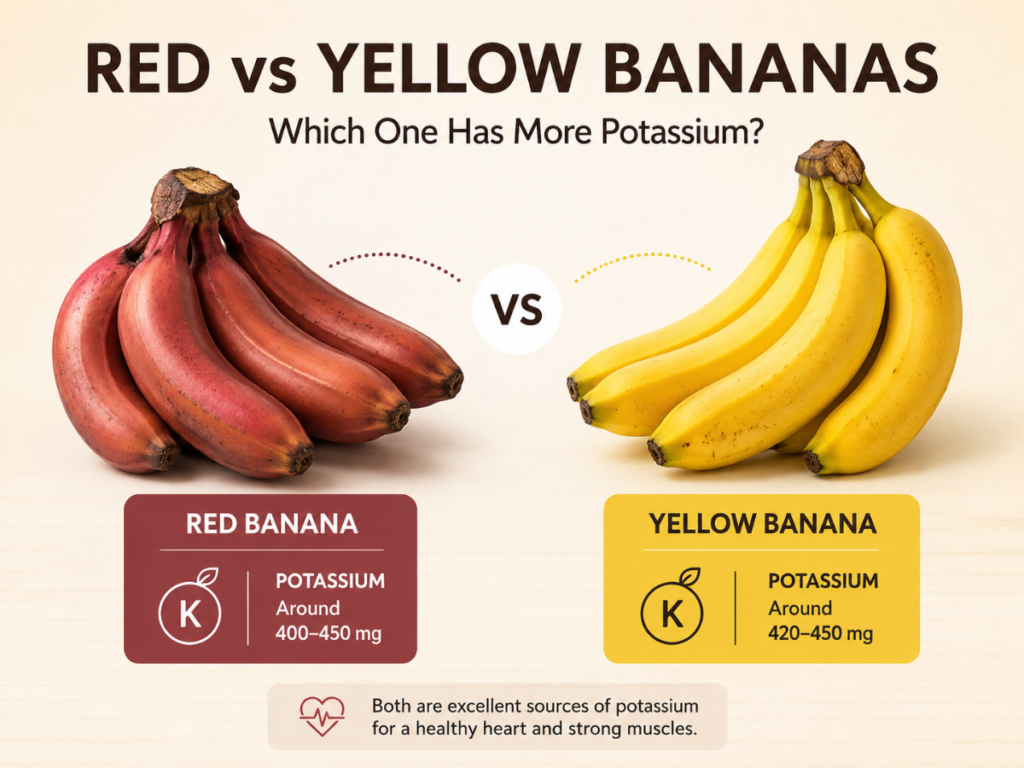
Both red and yellow bananas have the same nutritional value. They both contain carbs, fibre, potassium, vitamin B6, and vitamin C.
Red bananas contain more antioxidants, as well as slightly more vitamin C, depending on the type. They are normally smaller, denser, sweeter, and have an interesting reddish skin.
There is no reason to prefer any particular type in all situations. They can both become a healthy addition to your diet.
How to Add Red Banana to Your Diet
You can simply eat a ripe red banana as a snack. Another way to use it is to cut it up and add it to oats, yoghurt, fruit salads, smoothies, and pancakes.
Due to their natural sweetness, bananas can help you use less sugar in some recipes.
Possible Side Effects
In general, red bananas have no negative effects on health; however, excessive intake can cause bloating or digestive issues in some people.
People who have diabetes should be careful regarding the amount because red bananas have carbohydrates and natural sugars in them. For patients with kidney-related problems or those who must limit their intake of potassium, professional dietitians’ suggestions should be followed.
Red banana allergy occurs rarely, but it is possible, especially among people allergic to latex.
My Personal Favourite
The reason why I personally love these bananas is their unique taste and look combined with a usual banana flavour. They are handy to eat without any preparation.
The most delicious way I find to consume them is with plain yoghurt and a couple of nuts.
Conclusion
Red bananas are fruits rich in fibre, potassium, vitamin B6, vitamin C, magnesium, and antioxidants that help maintain the digestive system, immunity, heart function, and energy levels.
Thus, in 2026, red bananas remain a simple addition to a varied diet. However, they provide useful nutritional value but are not a cure for diseases.
About the Author