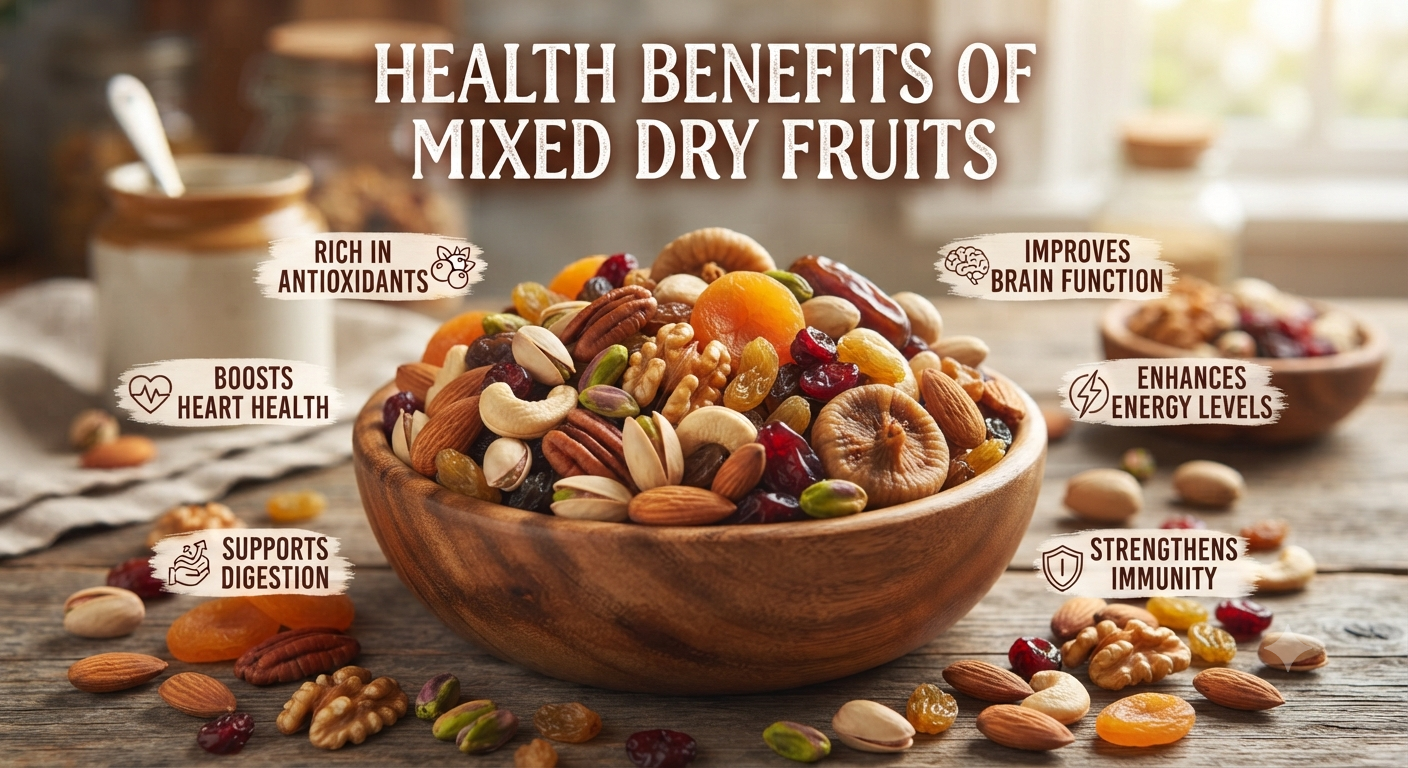

A little bowl of almonds, walnuts, cashews, raisins and dates is a common occurrence in many Indian households. A typical association with mixed dry fruits is festivals or any family function, and the usual recommendation is to eat a few daily. However, it is not only delicious and convenient, but also offers a good balance of healthy fats, proteins, fibre, vitamins, minerals and plant compounds.
How much and what type you eat are important, however. Dry fruits and nuts are energy-dense, but are they also calorie-dense? If you select unsalted nuts and dried fruits (sugar-free) and serve them in moderation, they can be a good addition to a balanced diet.
What Makes Mixed Dry Fruits Nutritious?
A mixed dry fruit bowl is typically a combination of nuts like almonds, walnuts, cashews, and pistachios with dried fruit like raisins, dates, figs or apricots. Both have slightly different nutritional values.
Nuts can specifically provide unsaturated fats, protein, fibre, vitamin E, magnesium and micronutrients. Walnuts are also a source of a plant-based omega-3 fatty acid called alpha-linolenic acid (ALA). Dried fruits are rich in carbohydrates, fibre and minerals like potassium, but the drying process increases the amount of natural sugars and calories in the fruit.
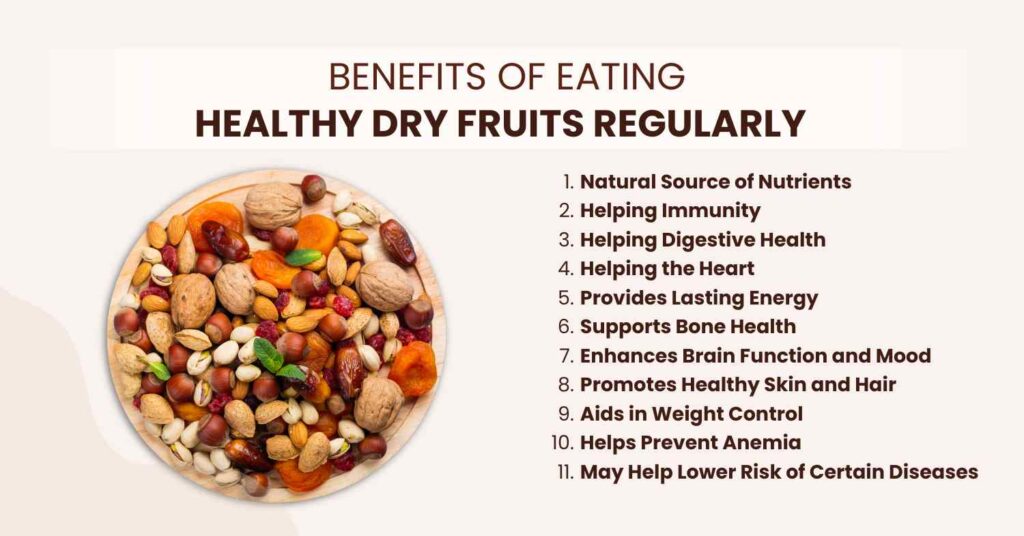
7 Health Benefits of Mixed Dry Fruits
1. Supports Heart Health
Nuts are rich in mostly unsaturated fat, fibre and other healthy components. Nuts have been linked to improved cardiovascular benefits, but they should be part of an overall heart-healthy diet rather than a dietary replacement.
2. Provides Convenient, Sustained Energy
Carbohydrates from dried fruits and fat, protein and fibre from the nuts make mixed dried fruits a perfect snack to eat when you need something more substantial than biscuits or sugary snacks. This can be especially helpful during a hectic working day, when travelling or between meals.
3. Helps Support Digestive Health
One of the greatest benefits of eating nuts and appropriate dried fruits is their fibre content. Dietary fibre is important for maintaining healthy bowel movements and digestive function. Bloating or digestive discomfort can occur, though, when a lot is eaten in a short period of time, especially for individuals who are not used to eating a lot of fibre.
4. Provides Antioxidant Nutrients
Many nuts and dried fruits are rich in vitamin E and other plant-based antioxidants. The compounds are able to protect cells from oxidative stress. Almonds, walnuts and some dried fruits may then be a part of a healthy diet that provides valuable antioxidants.
5. Supports Bone Health
Nuts like almonds, cashews and other nuts provide minerals, including magnesium, calcium and phosphorus. These nutrients are significant to the development of healthy bones and teeth. Mixed dry fruits should be considered as a component of a diversified diet, not a diet on its own.
6. May Help with Appetite Control
Nuts are not low in calories but are very filling due to their protein, fibre, and healthy fat content. Some people may feel fuller when they switch out a portion of highly processed snack foods for a serving of nuts, which can help curb cravings. The single word is replacement; too many calories from dry fruits at the same time can be counterproductive.
7. Easy to Add to Everyday Meals
I love this concept of mixed dry fruits because they’re easy to prepare. It can be mixed in with oatmeal, yoghurt, homemade trail mix, salads and even a plain breakfast. This helps to make healthy eating seem more like a normal habit than a rigid one.
How Much Mixed Dry Fruit Should You Eat?
It’s not always more the merrier. Nuts and dried fruits are high in energy density, so it is important to keep the portion sizes small. It’s better to have a small amount of food out at a time than to eat from a large container again and again. According to Harvard Health, a portion of dried fruit is approximately ¼ cup, and a portion of nuts is about an ounce.
When using dried fruits and unsalted nuts, opt for unsalted ones when you can for everyday use. Look at the ingredient list – some dried fruit products contain added sugars.
Who Should Be Careful?
Those who are allergic to nuts should steer clear of the nuts and be careful of products containing nuts that may have cross-contamination. People who keep track of their blood sugar should also keep in mind that dried fruit is just concentrated natural sugar. Those with a medical condition who are on a restricted diet should check with a healthcare professional about appropriate amounts.
The Bottom Line
Mixed dried fruits aren’t a magic food, but they can be a savvy addition to many highly processed snack foods. If consumed in the right quantities, they are a nutritious mix of healthy fats, protein, fibre, minerals and antioxidant compounds.
My practical approach would be simple: choose variety, keep the portion modest, avoid unnecessary added sugar and salt, and treat mixed dry fruits as part of a balanced diet—not as a substitute for one. This subtle modification can transform your daily snack into something both delicious and healthy.
About the Author